Translate This Page
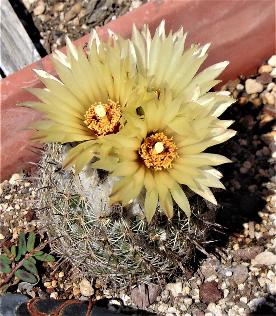
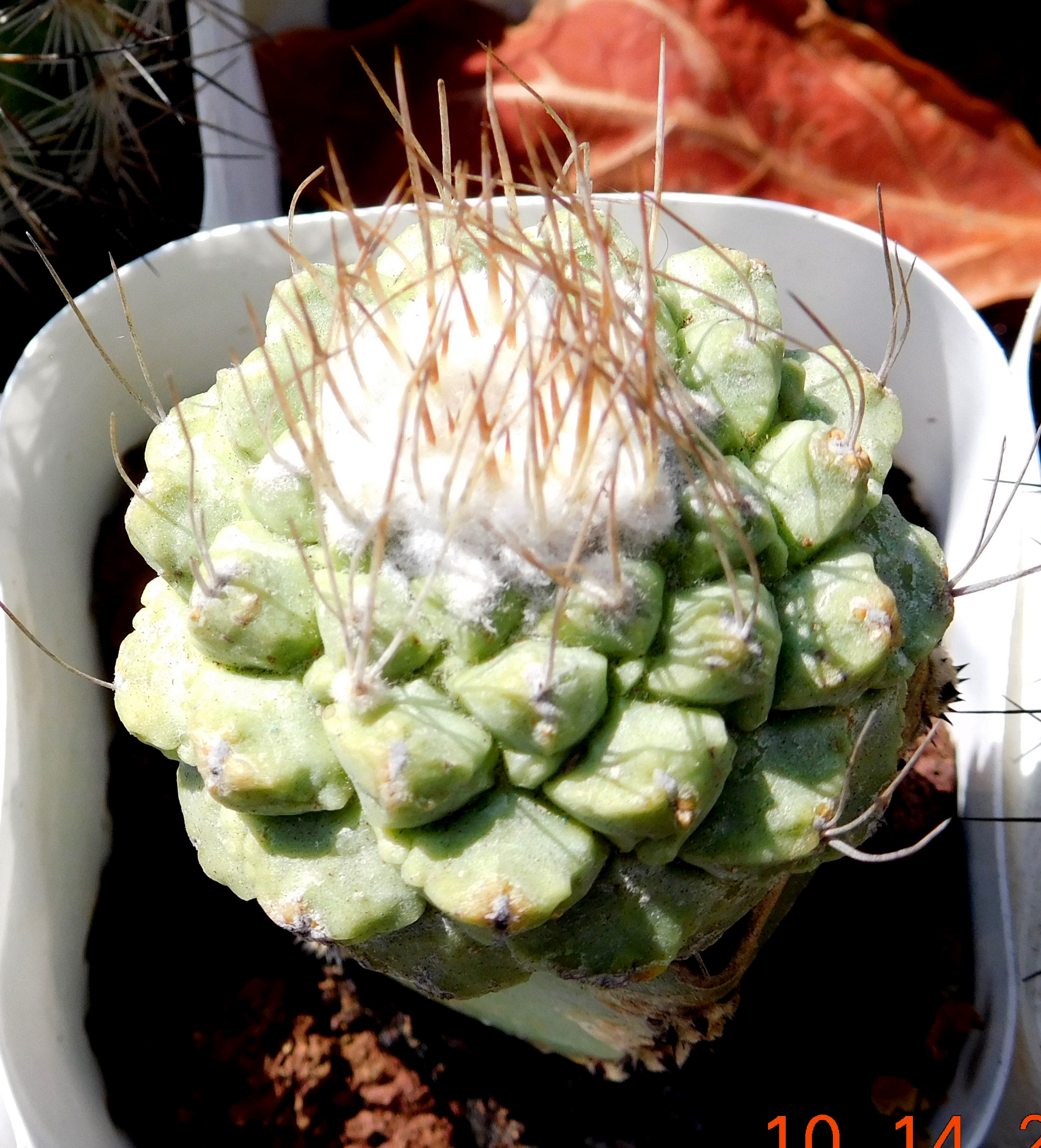
Strombocactus disciformis is a small rare cactus. The body is 3 to 8 cm high, reaching 20 cm in age, and 3 to 9 cm across. Propagation exclusively by seeds. But the seedlings are tiny and very slow growing.
It takes one or two years to reach diameter of 1-2 mm!!! At this time they are very sensitive to illnesses. Once they have reached 4 years old or more they are relatively easy to grow, the problem is getting them to 4 years old! Than they reach 2 cm of diameter in about 6 - 8 years, and require very careful watering. Plants need 8 to 10 years to reach the flowering size.
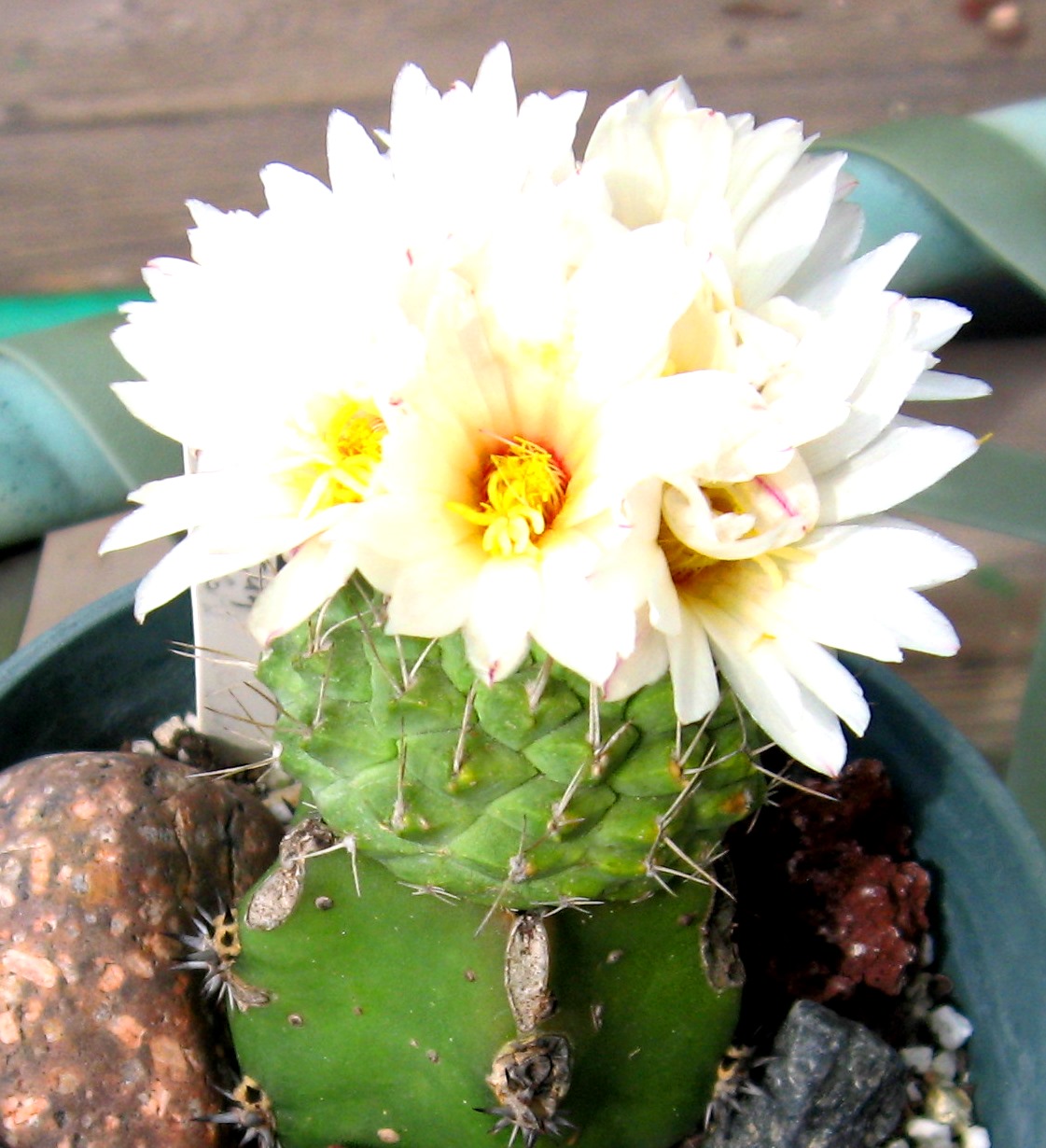
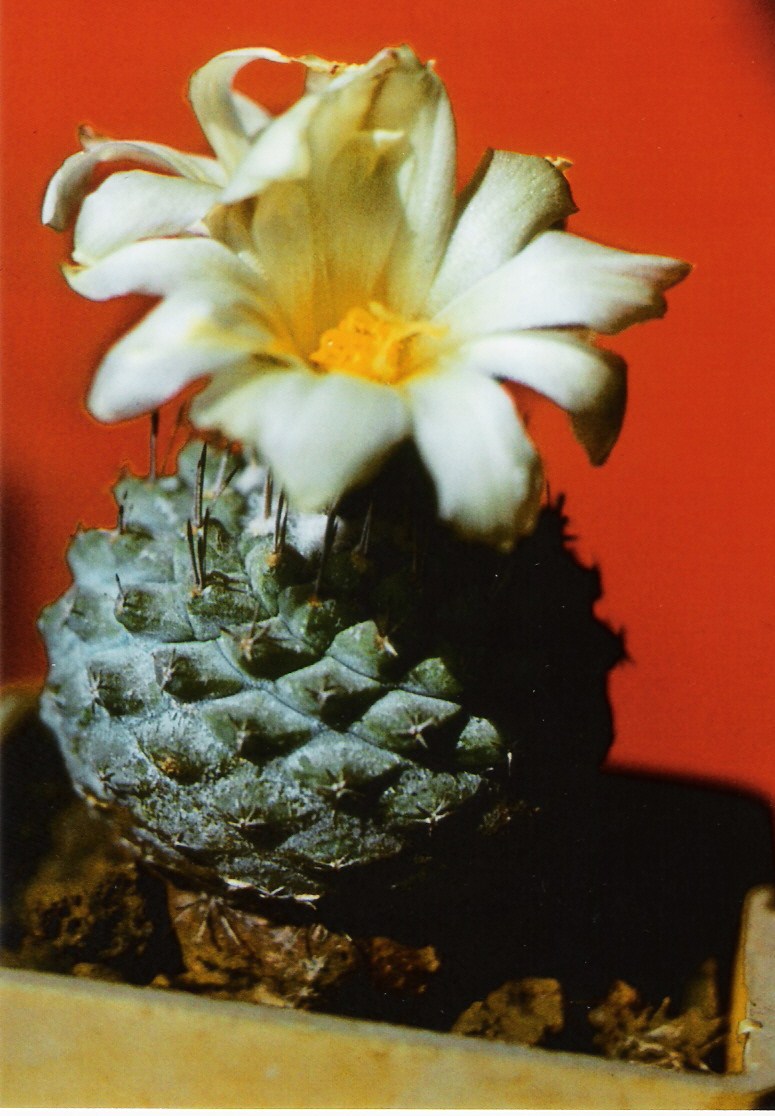
The cacti above are from my collection
Strombocactus disciformis Ø2.5 cm , grafted. You can buy it for $14.00. It's 55% less than the cactus value. Out of stock
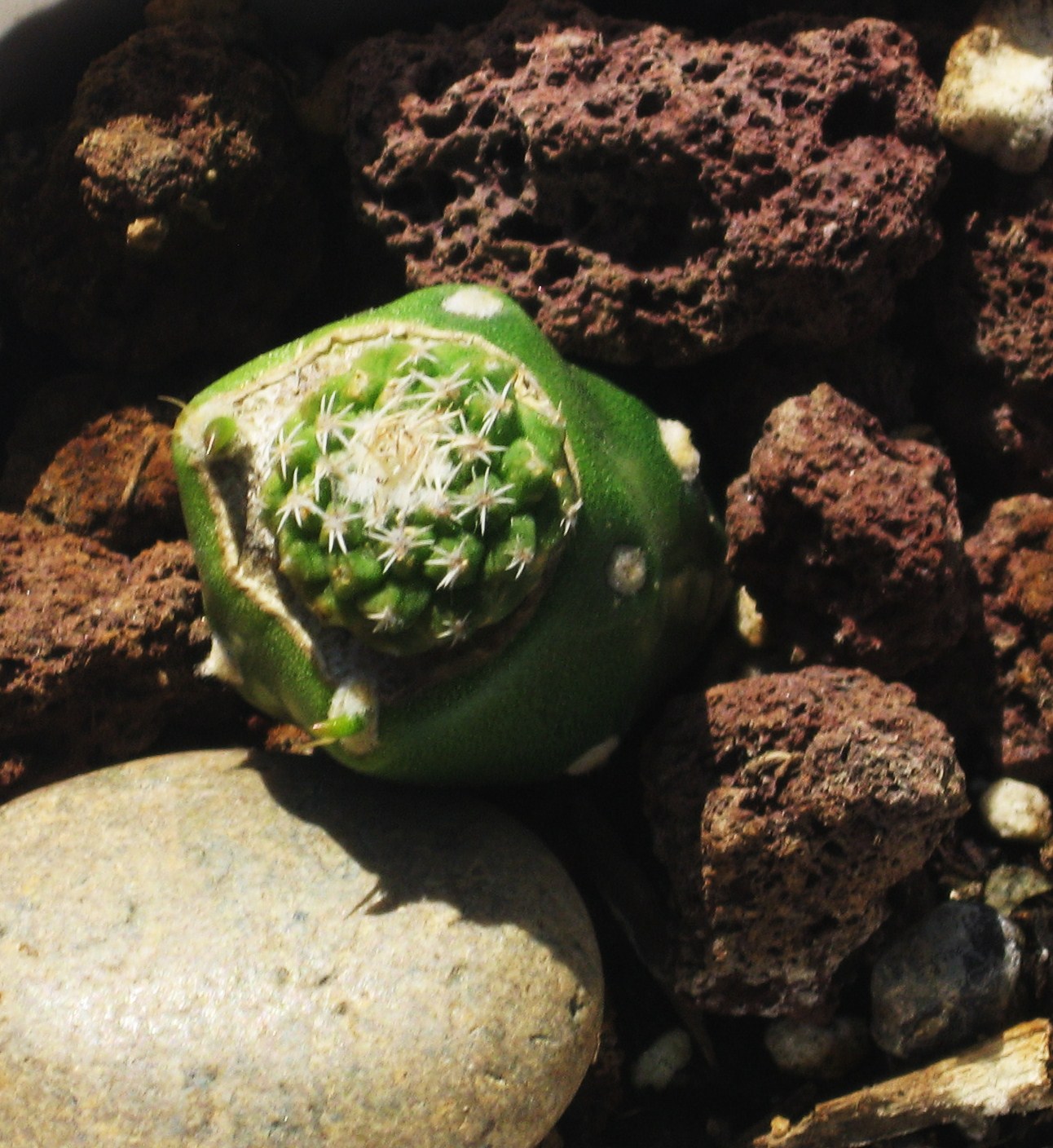
There is a very low ammount of Srombocactus disciformis
Strombocactus disciformis Ø4 cm , grafted. Price $28.00 It is only one in the stock. The price is 35% less than the cactus value
Out of stock
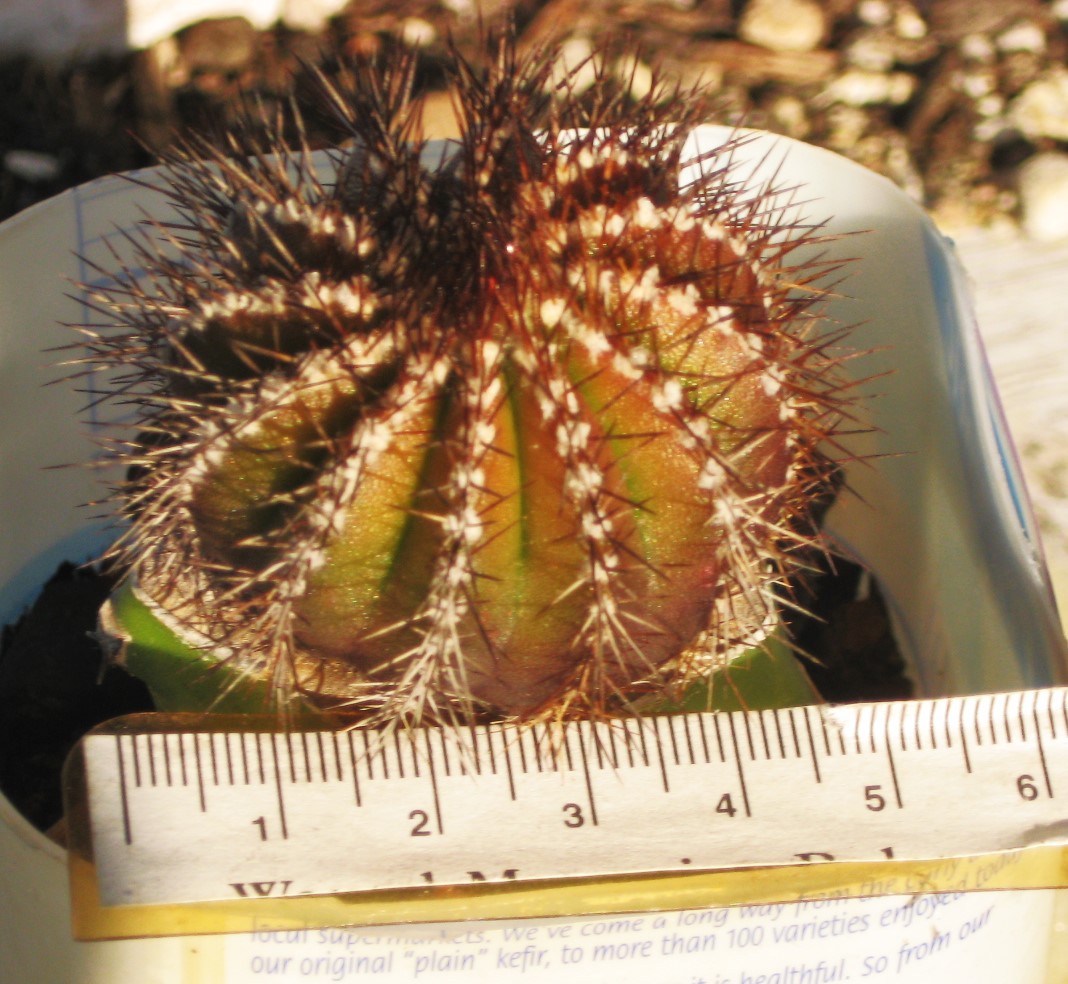
Uebelmannia pectinifera Ø4 cm $15.00, grafted. Grafted plants grow 4 times faster. Grafting is used also for species that are very sensitive to rot. Uebelmania pectinifera have highness sensitivity to fungus.
 It
is one of the most beautiful cactus species having a dark green, firm, almost lizard-skin textured 'skin', nice angularity to it's overall spherical shape and linear arrays of
not-too-viscious black spines down it's sides on a white fluffy
background. It's a striking cactus and most people seem to notice
it before all others in the garden. Out of stock
It
is one of the most beautiful cactus species having a dark green, firm, almost lizard-skin textured 'skin', nice angularity to it's overall spherical shape and linear arrays of
not-too-viscious black spines down it's sides on a white fluffy
background. It's a striking cactus and most people seem to notice
it before all others in the garden. Out of stockBelow there is detailed description of the species for sale. You can find answers on many questions about these species.
Echinocactus grusonii
Common Name(s): Golden Barrel Cactus, Golden Ball Cactus, Mother-in-Law's Cushion, Mother-in-law's-seat

E. grusonii is a wonderful popular plant for adding texture, color and shape to landscapes.
The striking round shape and the dramatic golden bright-yellow spines that absolutely light up in daylight.It has been increasingly used as an architectural plant in garden design also as in a window-sill.
Description: Growing as a large roughly spherical globe, it may eventually reach over a meter in height after many years. The young seedlings like the other Echinocactus and Ferocactus seedlings, the rib structure is not yet apparent, and they have pronounced tubercles making them look superficially like Mammillarias.
Stalk: is pale green
Ribs: There are 35 ribs in mature plants, but young plants have tuberous app
Spines: straight golden yellow radial spines
Sun Exposure: Full sun to partial sun
Water Needs: Water generously in summer; less watering in winter.
Min Temperature: 55°F (12°C) Frost Tolerance: Hardy to 14° F (-10°C) for short periods
Ferocactus latispinus
Common Name(s): Devil's Tongue Barrel, Crow's Claw Cactus
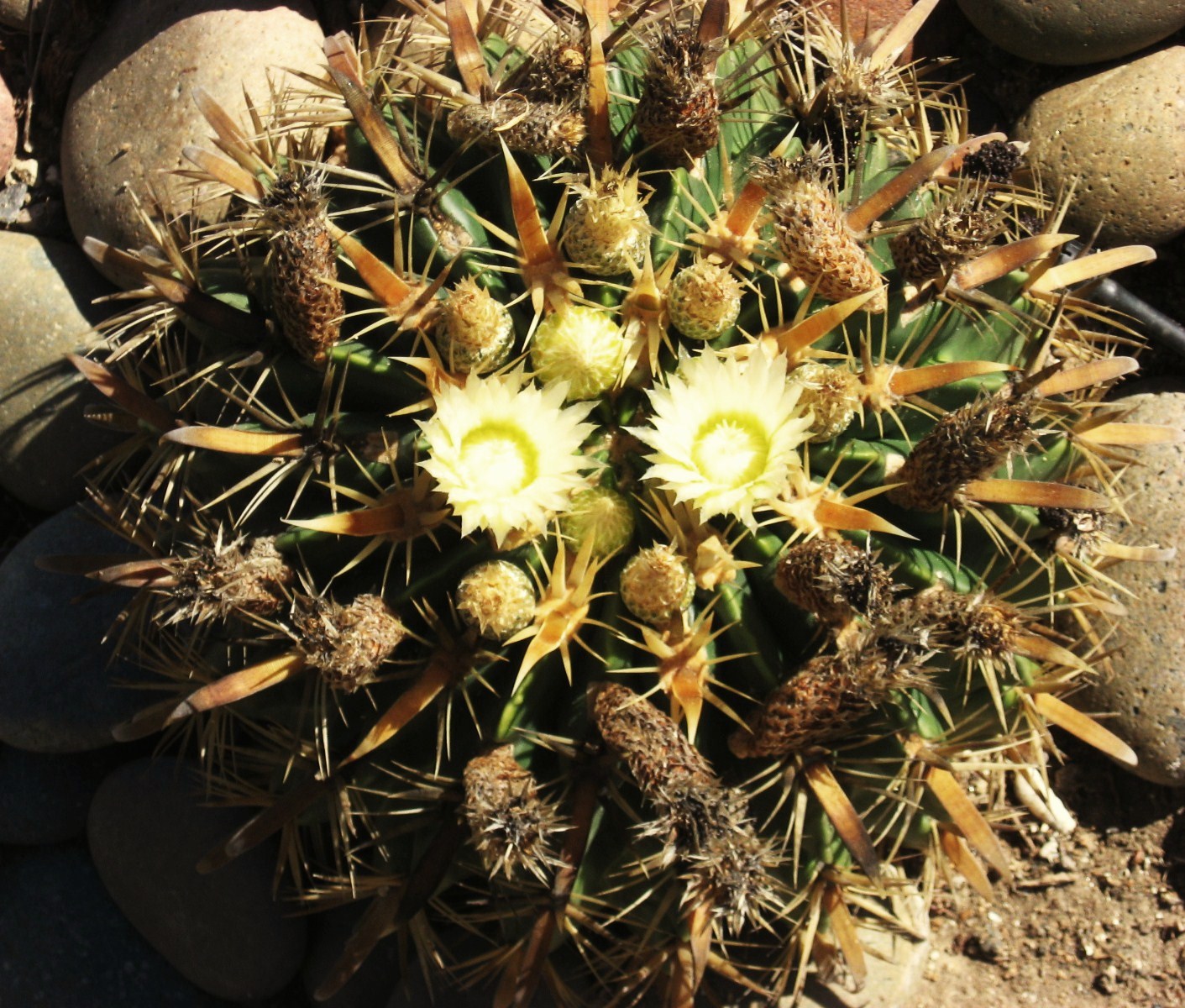
Etymology: Ferocactus: From the Latin word ferox, meaning fierce and the Greek word kaktos, meaning thistle. Latispinus: From the Latin words latus, meaning broad or wide and spina, meaning thorn or prickle.
Description: Globular cactus. Ferocactus latispinus is fairly popular in cultivation because it blooms very early, many young plants will bloom when they reach 4 inches in diameter (10 cm).
Stalk: 10 to 16 inches in diameter (25 to 40 cm);
Ribs: 14 to 23 ribs
Spines:
Central (S): 4 large central spines, the lowest central is wider
Radial (S): 6 to 12 1-inch long radials
Flowers: pinkish purple or yellow flowers, 1 to 1.5 inches in diameter (2.5 to 3.5 cm). They come in late autumn to early winter, and need a fair amount of bright sunlight to form.
Water Needs: Little to moderate water when established
Min Temperature: 50°F (10°C); Frost Tolerance: Hardy to 25°F (-4°C)
Ferocactus glaucescens
Common Name(s): Blue Barrel Cactus

Description: It can be a very neat, compact and attractive addition to any collection. Generally solitary, barrel cactus, bluish green stems up to 22 inches tall (55 cm), 20 inches in diameter (50 cm);
Spines: Straight white-yellow spines
Central (S): 0 or 1 central spine
Radial (S): 6 or 7 radials, 1 to 1.6 inches long (2.5-4 cm).
Flowers: Yellow flowers, 1.2 to 1.5 inches in diameter (3-4 cm), in summer
Sun Exposure: Sun to Partial Shade
Min Temperature: 50°F (10°C) Will take some frost
Ferocactus rectispinus
Common Name(s): Long Spined Barrel Cactus, Straight Spine Barrel
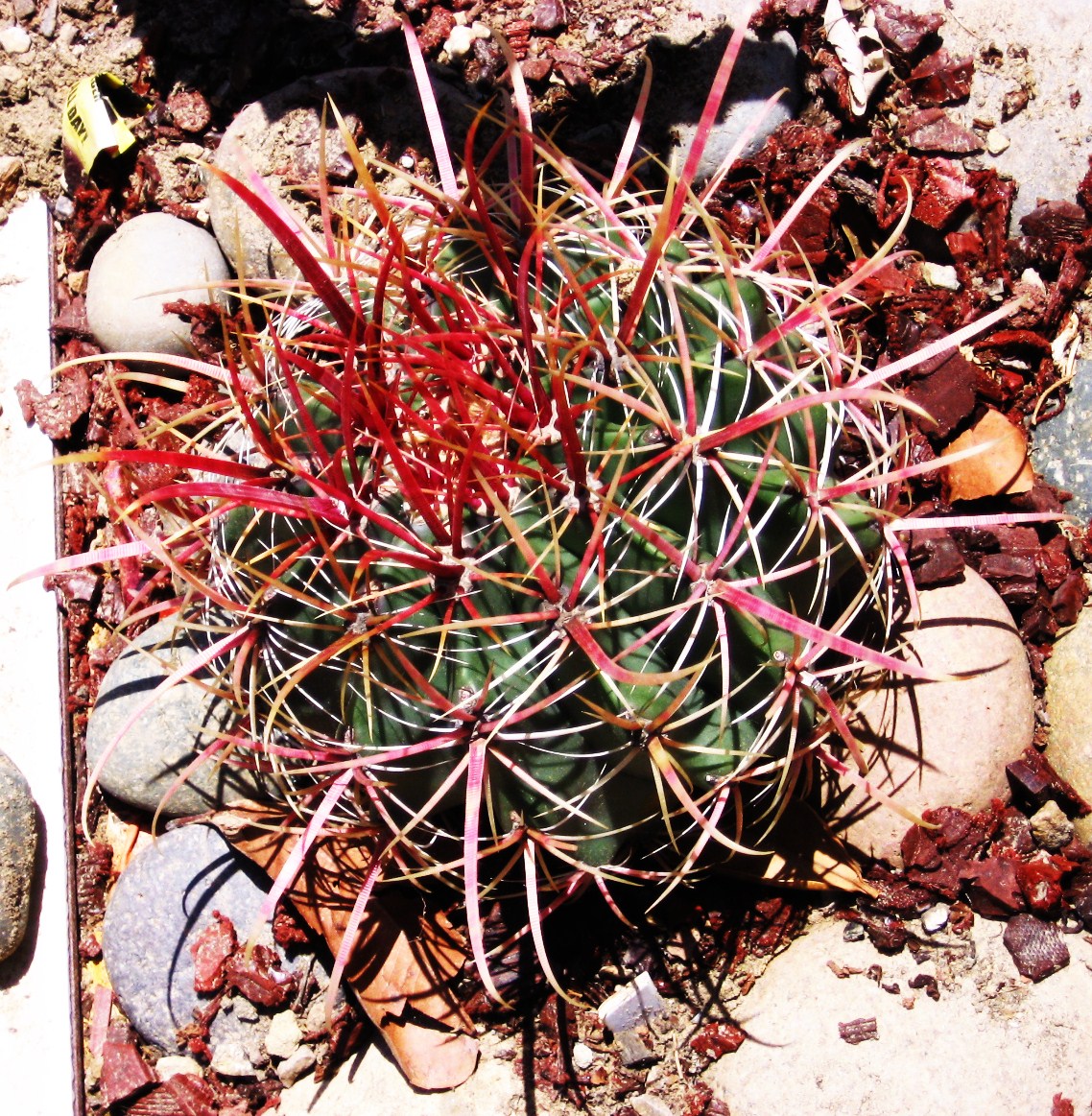
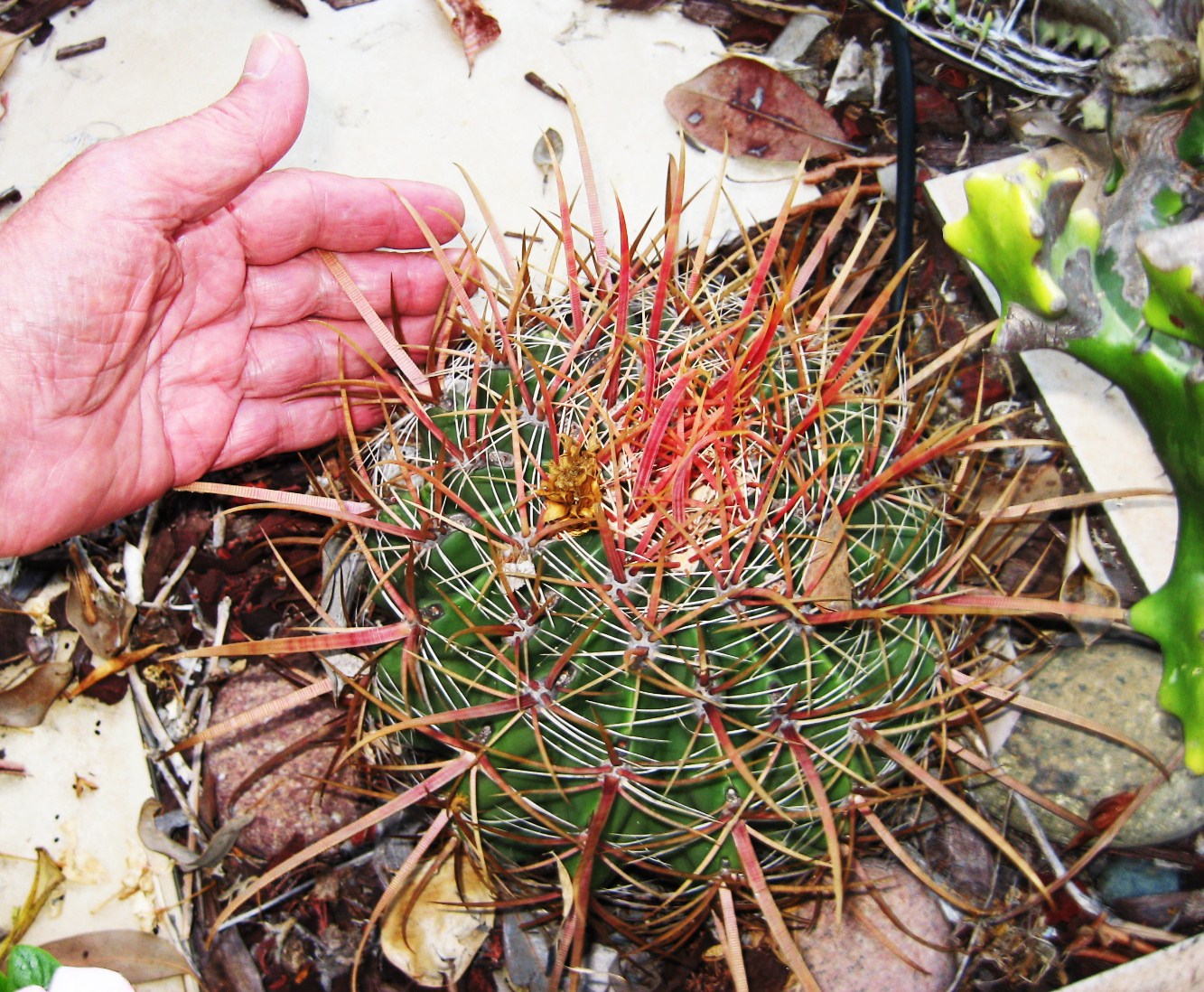
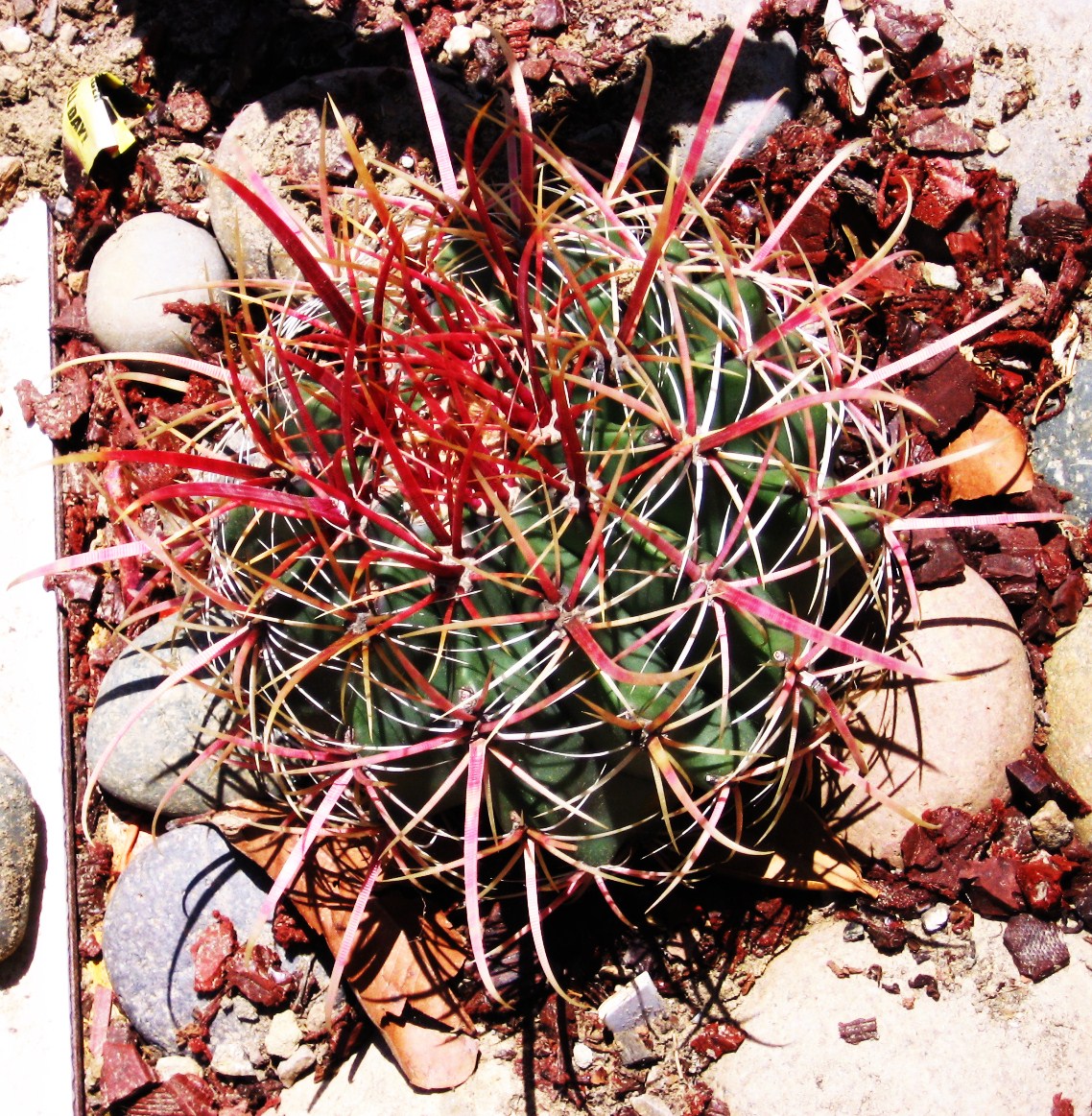
This is my 6 years seedling
Description: this magnificent plant has some of the longest straightest spines of the Ferocacti.
Stalk: Erect, globular when young to a stout cylinder when older, 30-200 tall × 30-60 cm in diameter; tubercled when young later forming ribs.
Ribs: 15-21, shallowly notched immediately above each areole.
Spines: New spines are bright red
Central (S): 1, very long ( 9-25 cm long × 2.5-4 mm. in cross section ), never hooked (or slightly hooked, but only on relatively young plants), roughly cylindrical, annulated, all robust and rigid. Reddish, reddish grey, or horn colored.
Radial (S): 5 to 9, spreading, not hooked, 2.5 to 7 cm long, with the upper 3 larger.
Areolas: Oval with brown wool, 3-4 cm apart.
Flowers: Large, light yellow, 6-7.5 long× 5-7.5 cm in diameter: Blooming in the Summer
Sun Exposure: Full sun to light shade
Water Needs: Little to no water when established; when the plant vegetate it needs watering when the blanket of soil is dry.
Min Temperature: 50°F (10°C); Frost Tolerance: 25°F (-4°C)
Propagation Methods: from Seeds
Mammillaria nejapensis
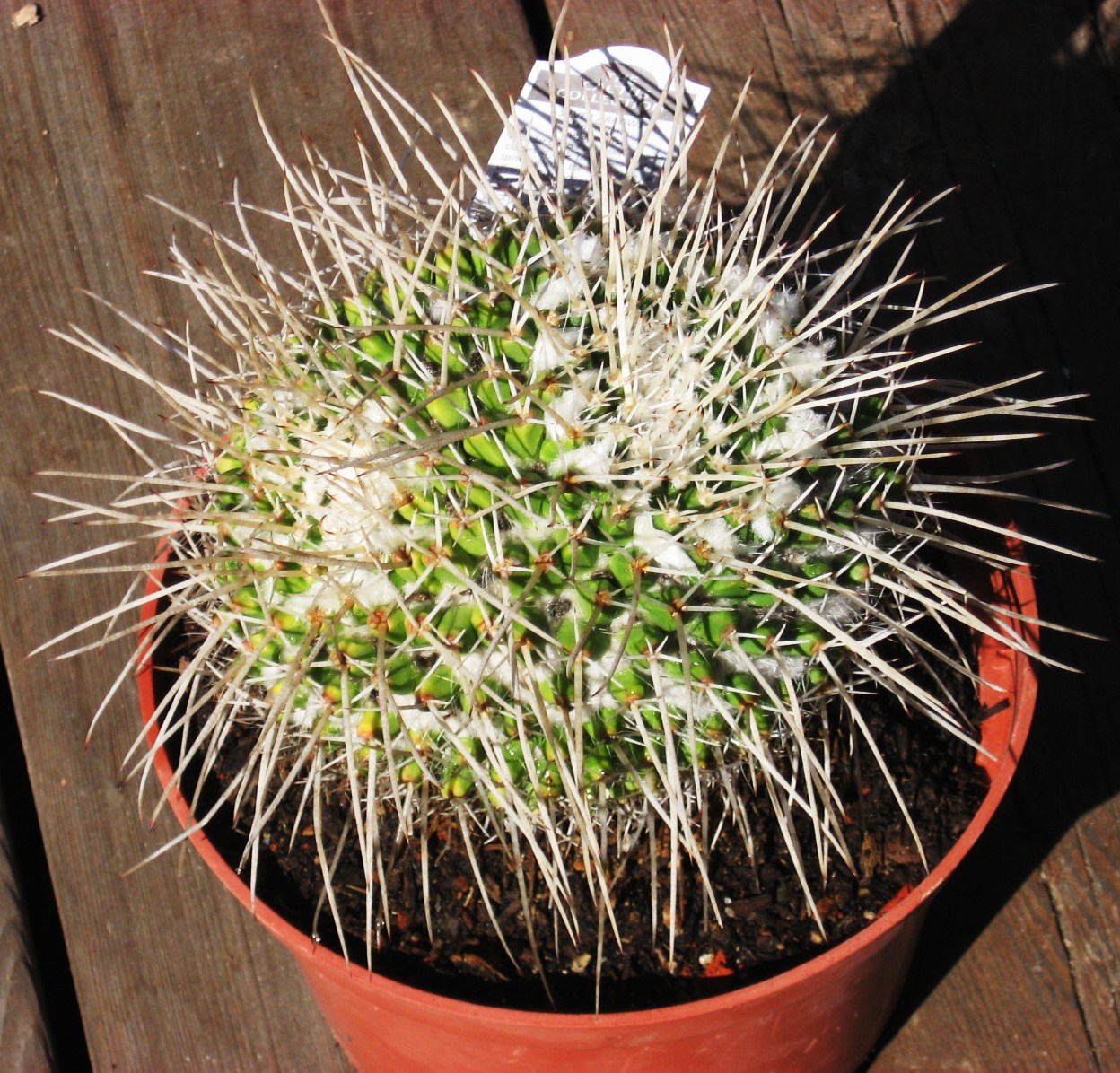
It forms globular stems with silvery white spines with black tips up to 2" in length, and dense wool at the areoles. After a year the head of plant divided, than every heads divided again. Do you imagine how unusual will be this cactus?
Mammillaria nejapensis is very variable, especially for the length of the spines, and at the beginning there were two recognized varieties: var. brevispina and var. longispina, with respectively short and long spines, but they are merely local or individual variations. This species branches basally or more frequently forms large colonies by dichotomous division.
Description: This is one of the Mammillaria commonly called "Owl Eye Cactus", known for dichotomous branching (forking or dividing into two parts). Although dichotomous branching is not a common occurrence in cacti in general, it happens for some reason in this particular subspecies. What is interesting about this cactus is that it began as a single head, and it has now divided twice, forming what will be four separate branches.When the division process started, it was obvious that four heads would appear, but I don’t think the one head divided quadruple. Most probably, one head became two, and then those two immediately divided.
The Mammillaria nejapensis forms globular stems with silvery white spines up to 2" in length, and dense wool at the areoles. Plant becomes slightly columnar to 6" in height. Each single stem begins to divide to form two stems to form large clusters.
Stem: Globose to short cylindrical, somewhat wider in the upper part, blue-green to dark green, to 15 cm high and 5 - 7.5 in diameter, with latex. A cream coloured 'snowy' tomentum is present on the top of the plant.
Tubercles: Tubercles firm, pyramidal with the lacteal juice, arranged spirally with 13-21 parastichys
Opuntia brachyclada hybrid
Common Name(s): Beavertail Cactus
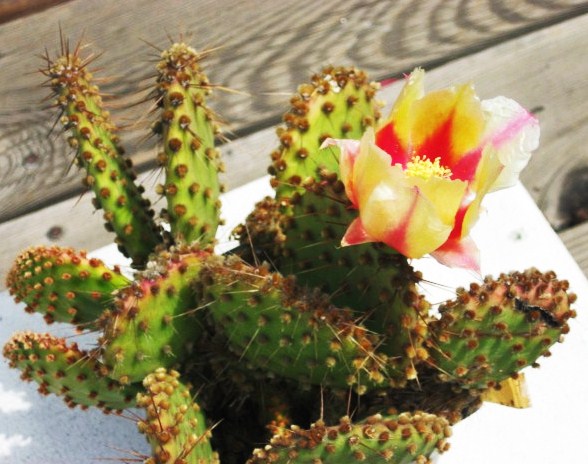
Opuntia brachyclada is a synonim of Opuntia basilaris. It has green pads
It is a smaller prickly pear cactus, and it will often start blooming when it has only two pads. The plant can withstand temperature -15º C ( 5° F).
It can withstand at - 15ºC. It grow very fast. For example, on the picture above the plant was outgrown from one segment during 5 months. It can be used on borders to make fences. Plant them along border with spaces 1.5 meter. It take a year to get a fence.
We have rooted segments of Opuntia ellisiana for $3.50, and not-rooted for $1,50.
Opuntia basilaris. Beavertial Cactus; Santa Rita prickly pear cactus

Distinguishing traits. With its distinctive purple coloring, it is easy to see why Santa Rita prickly pear is one of the most popular prickly pear species for Southwestern gardens.
Older specimens will often retain their purple coloring throughout the year.
The Beaver-tail Cactus is a smaller prickly pear cactus, and it will often start blooming when it has only two pads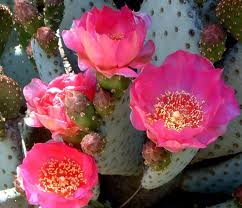
Opuntia basilaris seedlings
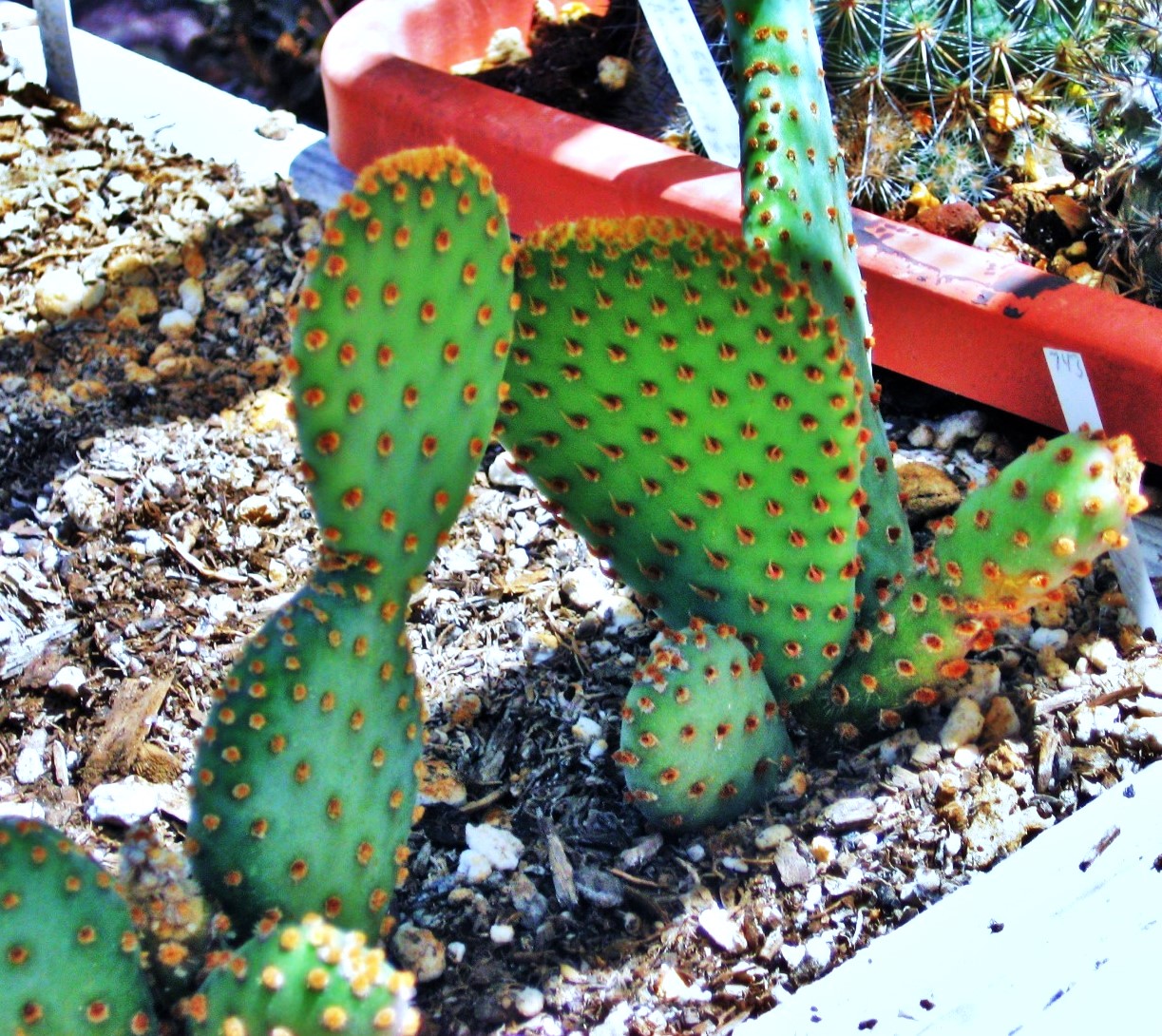
Seedlings have a strong root system. They more stable to rot than rooted segments..
We have two years pld Opuntia basilaris seedlings for sale. Price $5.00
Out of stock
Opuntia basilaris Rooted pads
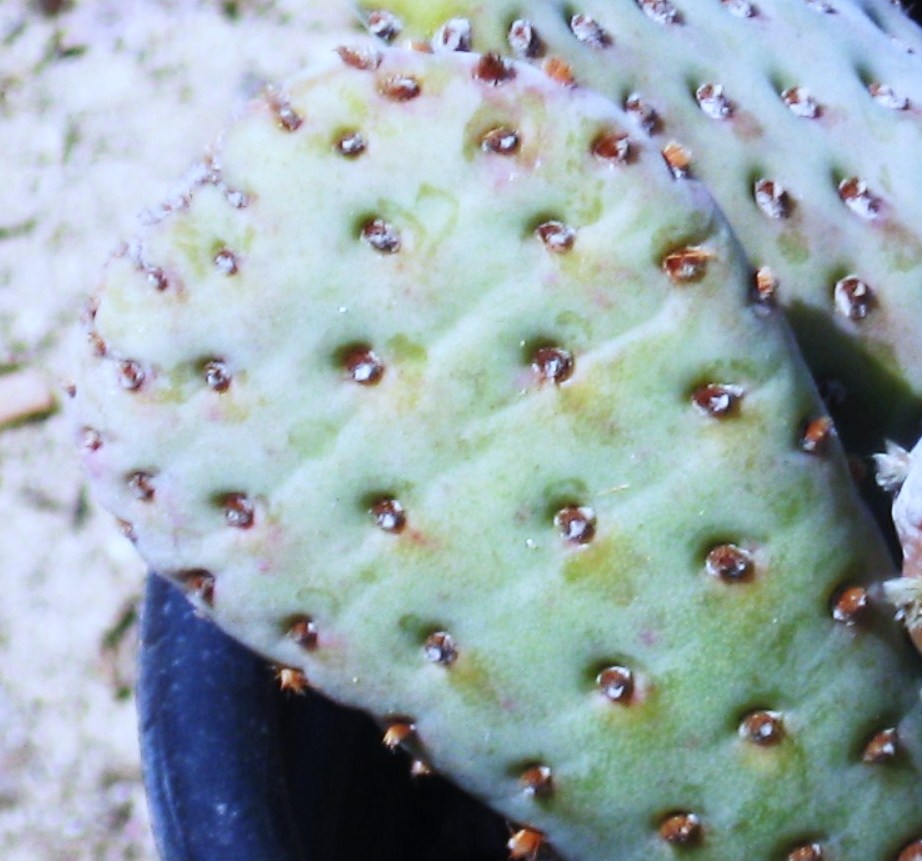
$ 5.00 USD New price $4.00. Out of stock
Common Name(s): Beavertail Cactus
The Beaver-tail Cactus is a smaller prickly pear cactus, and it will often start blooming when it has only two pads. Beware that the glochids (these little barbed bristles organized in clusters) can penetrate the skin.
Very good for landscaping as well as for windowsill
Copiapoa tenuissima with brown skin
Origin: Northern Chile (coastal mountains), Antofagasta - Chile (South America)
Recommended Temperature Zone: USDA: 10b-12
Growth Habits: Slowly clumping, heads up to 1.5 inches in diameter (4 cm) Skin brown
Flowers: Pale Yellow,Bright Yellow
Blooming Habits: The Copiapoa tenuissima has yellow 1 inch long (2.5 cm) flowers in spring and summer.

Encephalocarpus strobiliformis for sale grafted Ø3 cm for $12.00 Out of stock
|
|
|
|
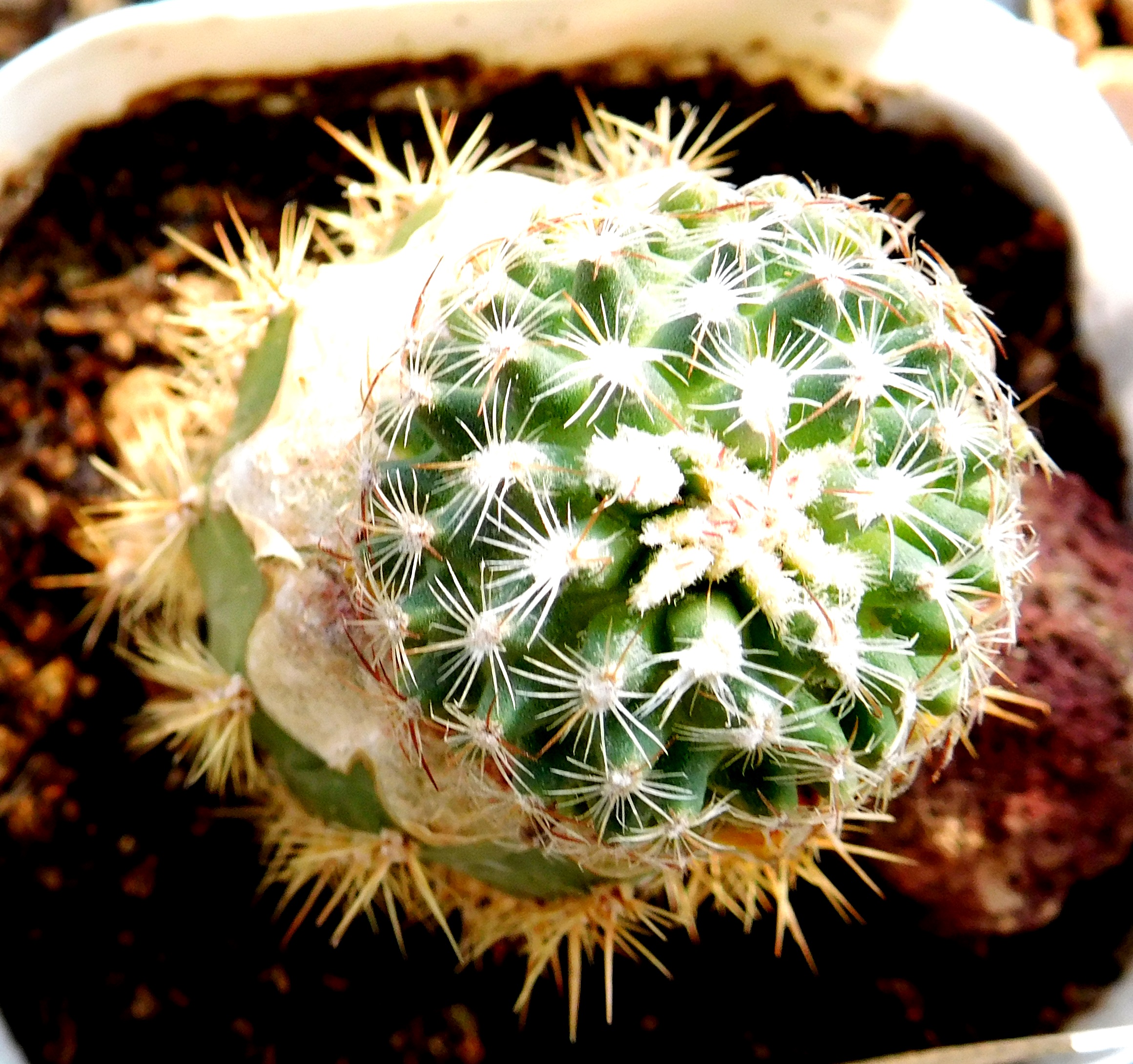
Encephalocarpus (Pelecyphora) strobiliformis A very slow growing, choice Mexican species, commonly called the "Pinecone Cactus" for its resemblance to a pine cone. |
Encephalocarpus strobiliformis young seedling from my collection |
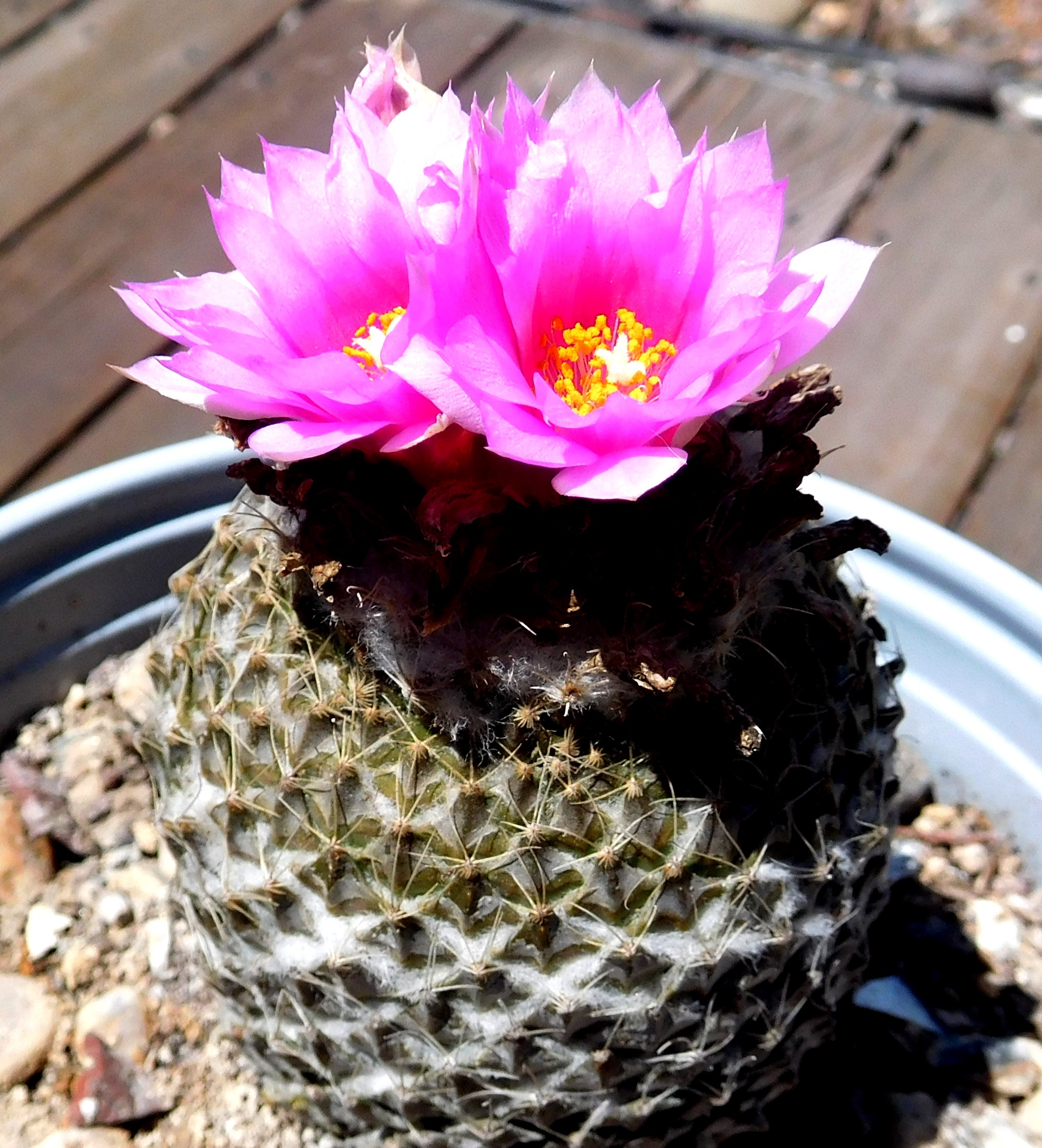
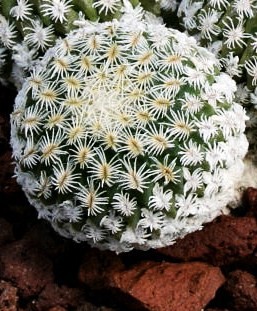
Toumeya papyracantha is a very rare. Its grow on the mountain deserts were the ultraviolet beams are very strong. They kill every fungus and bacteria.
Toumeya papyracantha is not accustomed to conditions of cactus collections. That is why most collectors grafted them on the strong stock.

Toumeya papyracantha rare cactus for sale. Common names: Grama-grass cactus Paper-spined cactus. Toumeya is a rare treasures of the southwest USA.
Toumeya papyracantha grafted for sale Ø2 cm Prize reduced from $7.00 to $5.00
.jpg?timestamp=1487961372097)
Out of stock
Toumeya papyracantha grafted for sale Ø3 cm Prize $10.00 is 40% less than cactus value
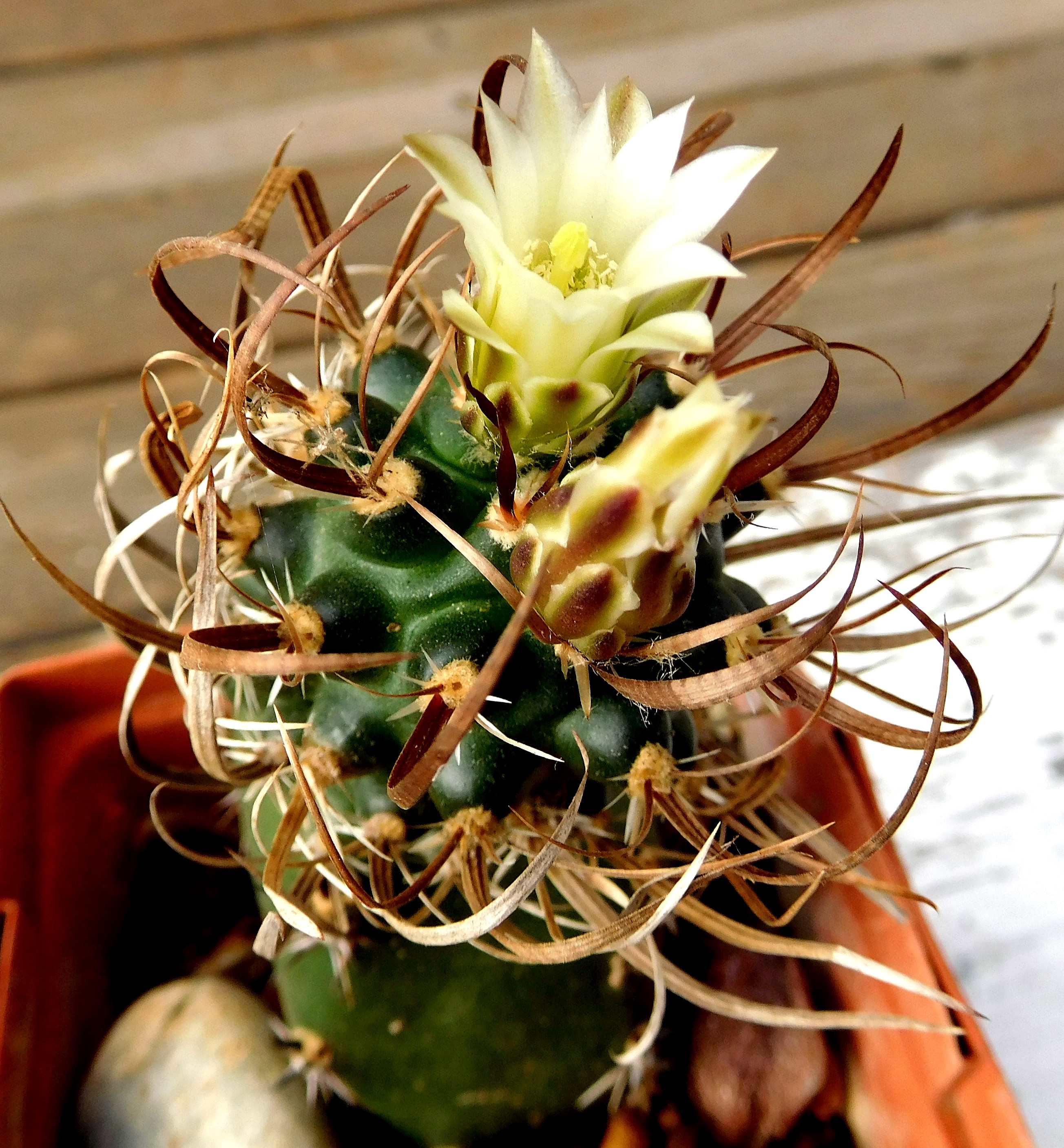
There is extremely low amount of plants
Out of stock
Opuntia basilaris Santa Rita prickly pear cactus for sale
New sale price $6.80 It's 25% less than the cactus value.
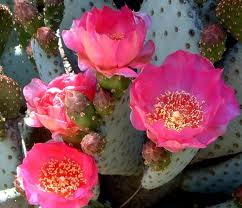
Common Name(s): Beavertail Cactus
The Beaver-tail Cactus is a smaller prickly pear cactus, and it will often start blooming when it has only two pads. Beware that the glochids (these little barbed bristles organized in clusters) can penetrate the skin.
Very good for landscaping as well as for windowsill
Out of stock
Flowers: flowers very numerous, grow from clumps of thorns They are 6 - 6.5 centimeters long.

Gymnocalycium
damsii is very variable, meaning it has the ability to change
characteristics from plant to plant despite staying within the same species.
New Offer Ø5 cm for $10.00. The value is $14.00
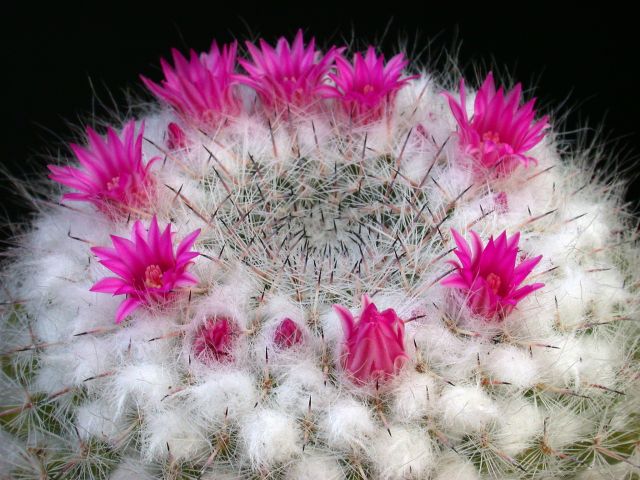
Grafted plants grow 4 times faster. Grafting is used also for species that are very sensitive to rot. Uebelmania pectinifera have higher sensitivity to fungus.
Grafted plants are using by cactus collectors to prevent rot of roots.
Uebelmannia pectinifera Ø6-7 cm, grafted New price $21.00 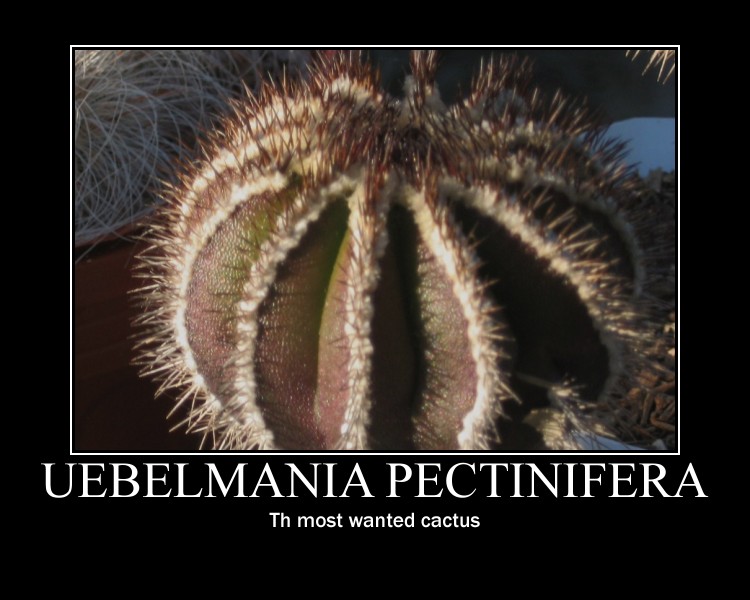 Out of stock
It is one of the most beautiful cactus species having a dark green and brown, firm, almost lizard-skin textured 'skin', nice angularity to it's overall spherical shape and linear arrays of not-too-vicious black spines down it's sides on a white fluffy background. It's a striking cactus and most people seem to notice it before all others in the garden.
Turbinicarpus viereckii
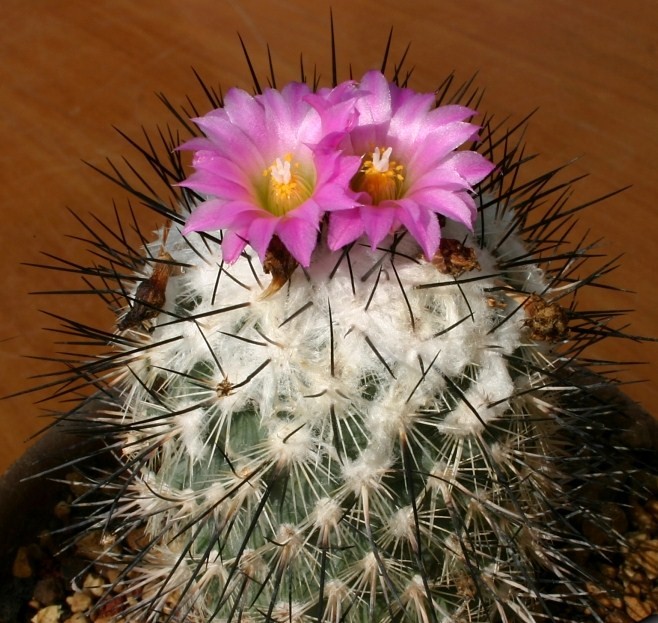 The regular price for Ø6 cm is $5.50
I used seeds for these seedlings taken from their origin - Tamaulipas area of Mexico and found at an altitude of around 2500 ft. Out of stock

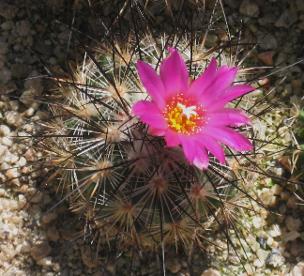
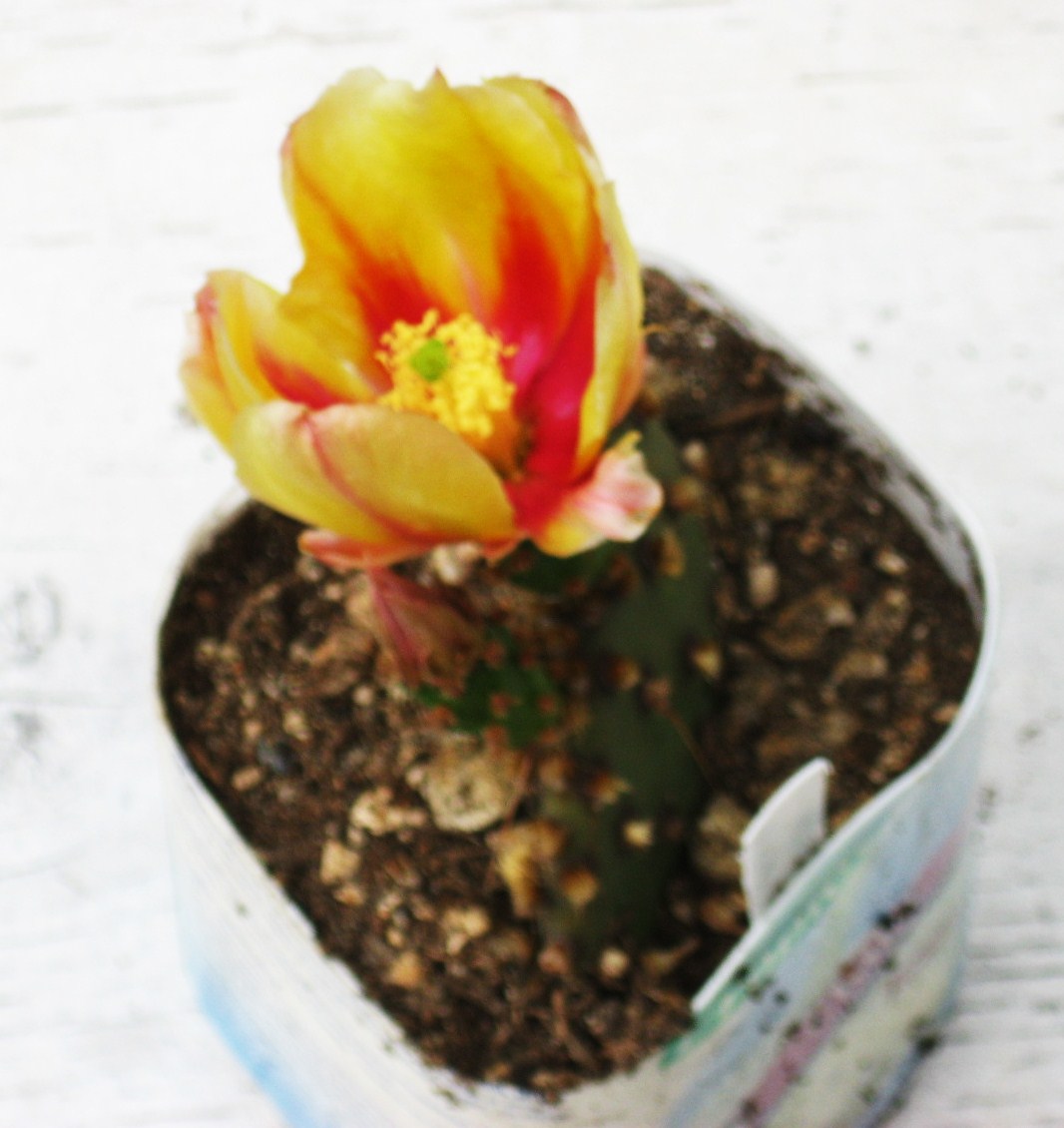
Opuntia brachyclada
 | |
$ 3.50 USD Out of stock
Opuntia brachyclada is a synonim of Opuntia basilaris. It has green pads It is a smaller prickly pear cactus, and it will often start blooming when it has only two pads. The plant can withstand temperature -15º C ( 5° F).Very good for landscaping as well as for windowsill | |
Opuntia brachyclada hybrid not-rooted pads $1.50
Opuntia brachyclada is a synonim of Opuntia basilaris. It has green pads Opuntia segments can be planted without roots directly in soil in the depth of 1/3 of the size of the segment. You can use a regular potting soil. Make soil a little wet and after 4 - 6 weeks you'll see new grows. Very good for landscaping as well as for windowsill
.JPG?timestamp=1407249001601)
New Offer for $1.00
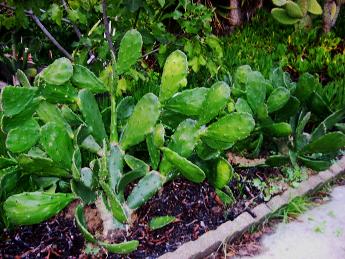
It is a very fast growing plan. It is good for landscaping or for making fences. People use it also for food. The pad is rooted very easily.
Price $1.50
Opuntia ellisiana Prickly Pear Cactus not rooted pad

It can be used on borders to make fences. Plant them along border with spaces 1.5 meter. It take a year to get a fence.
We have pads of Opuntia ellisiana not-rooted for $1,50. New Offer for $1.00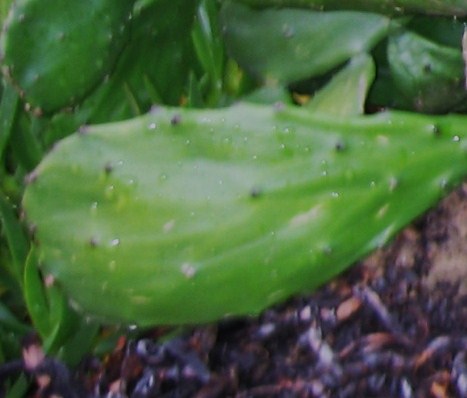
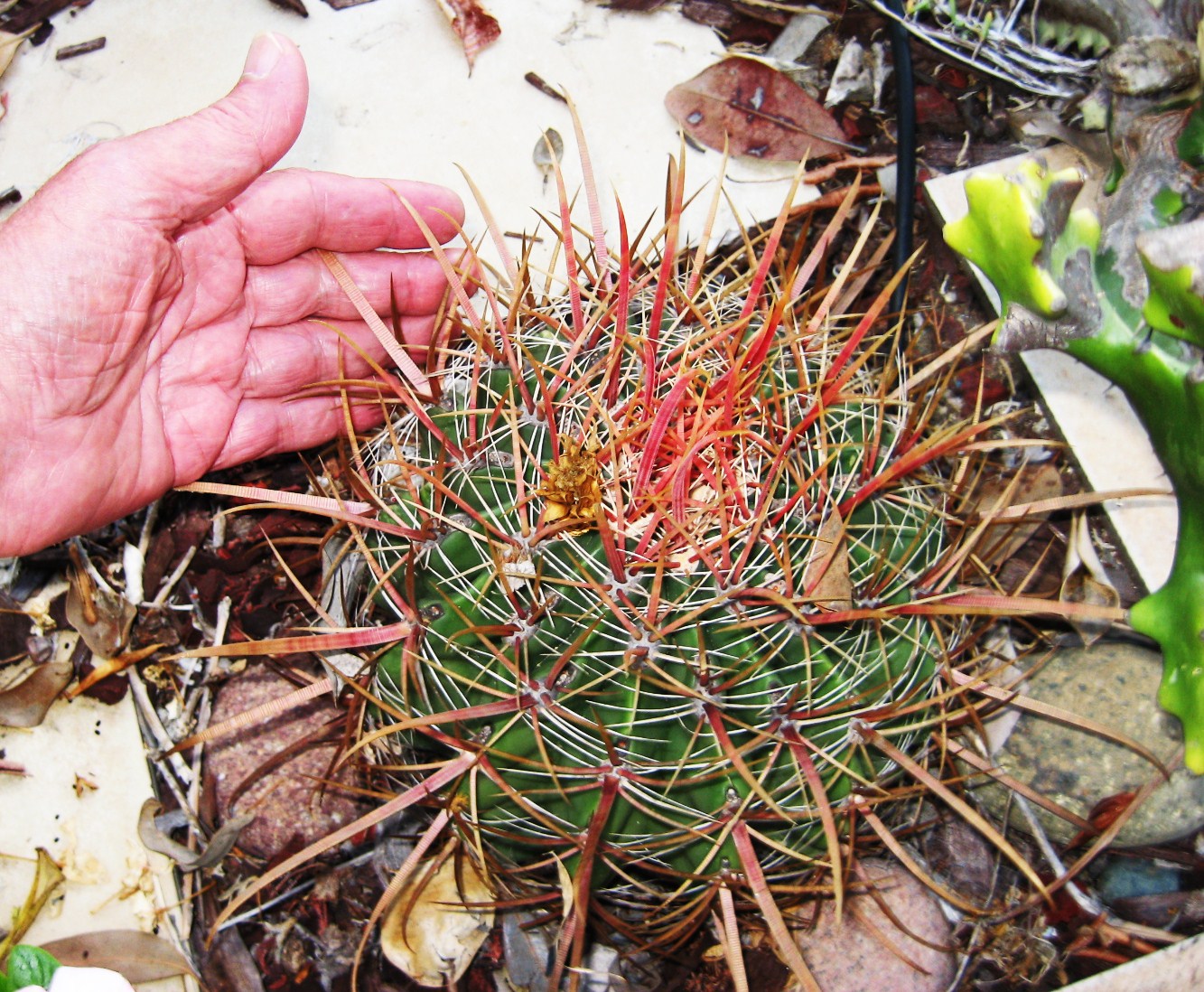
Ferocactus rectispinus for sale
Ø7 cm grafted for $7.30 Out of stock
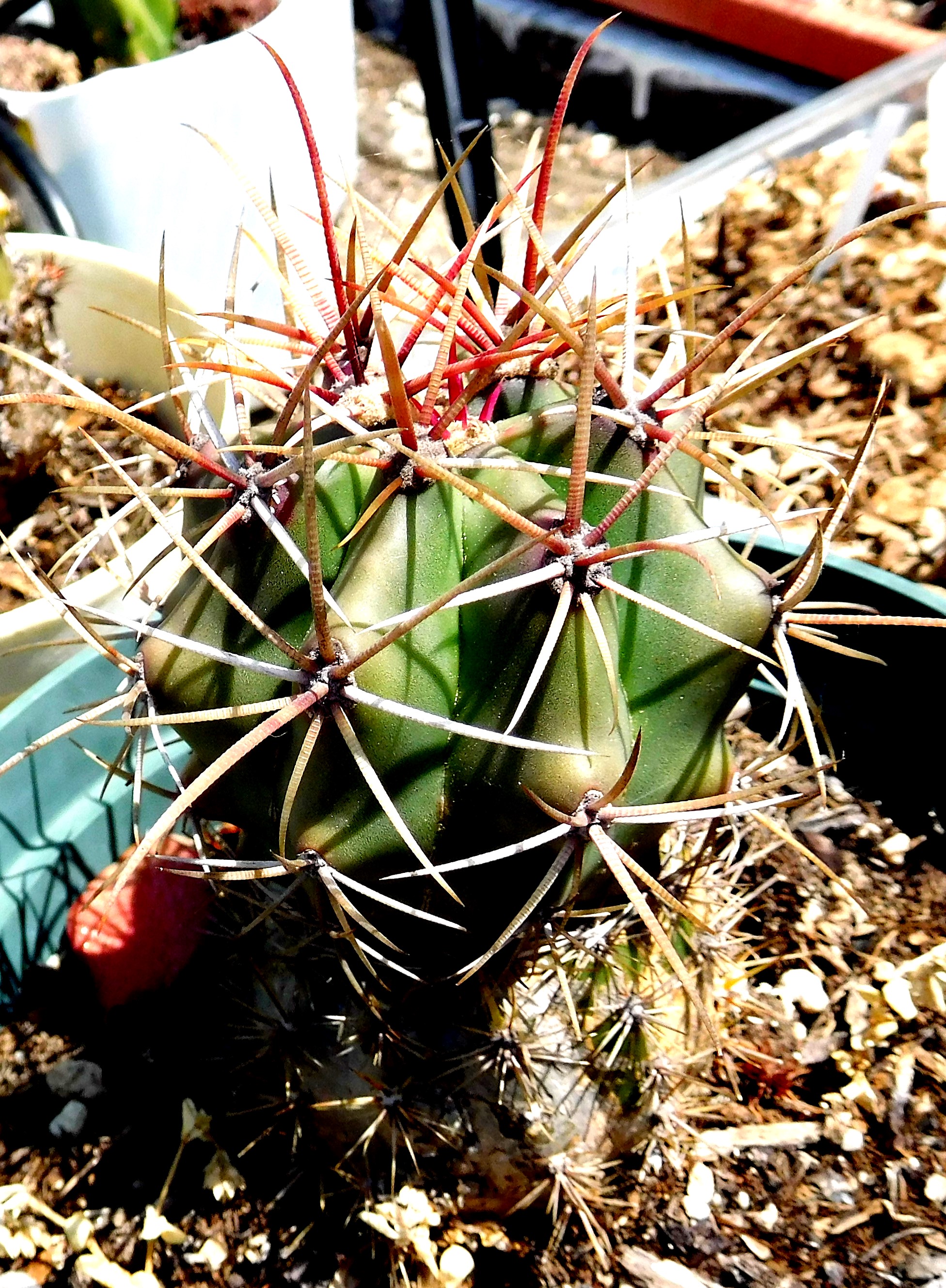
4 years old seedling Ø8 cm for $10.00 New price $7.30 Out of stock
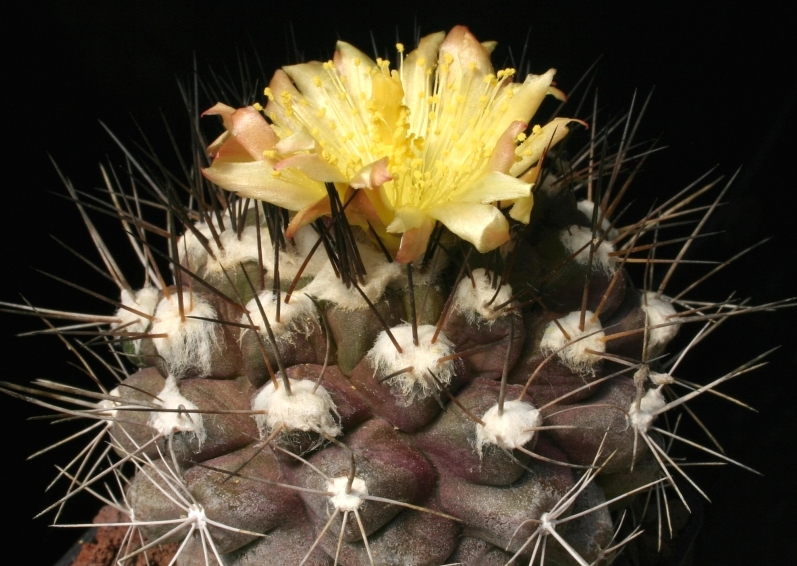
Copiapoa humilis

Copiapoa humilis is one of the most admired species of cacti It is an extremely variable species with many forms.
In considering C. humilis species, we need to bear in mind the remarkable differences between young plants, with short, thin spination and the darker coloration of the body compared to the more robust adults with longer and sturdy, flexible spines.
Stem: Sub-globular, depressed, pale olive-green to tan producing copious wool in the apex. 2.5-9 cm. broad by 2-6 cm. high.
The dark yellow flowers smell.
Bloom time:.Mid Spring; Late Spring/EarlySummer; Mid Summer;Late Summer/Early Fall
New Offer Copiapoa humilis
for sale Ø7 cm $10.00. It is 25%less then its value.
In bright sun the seedlings become brown colored
Ferocactus rectispinus for sale
Encephalocarpus strobiliformis (Werdermann) A. Berger Origin: Mexico
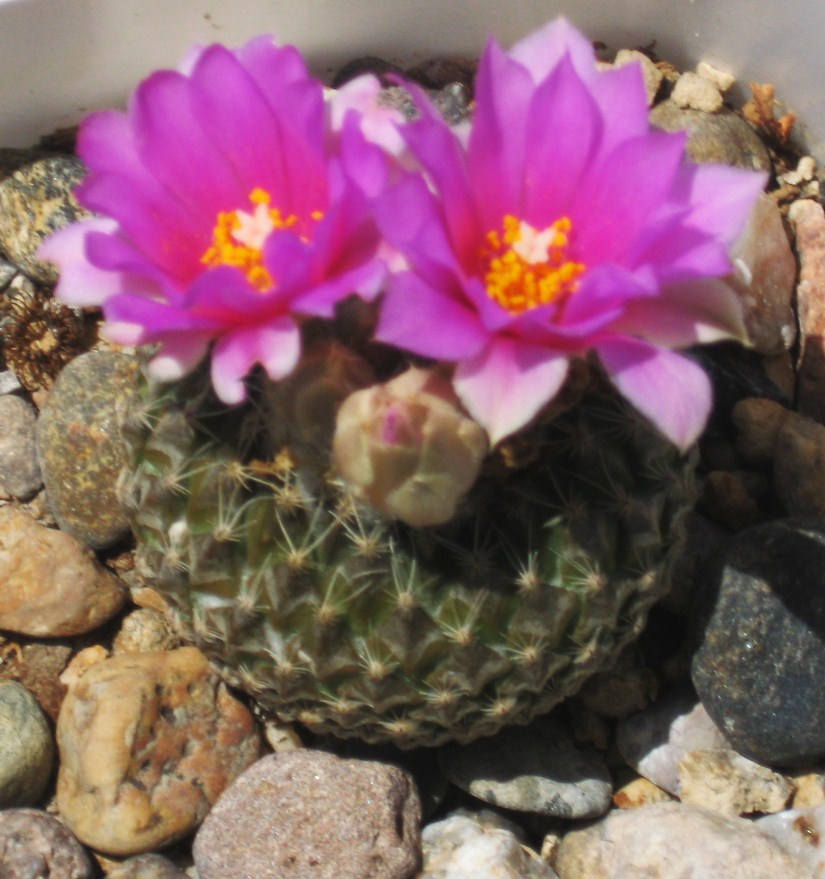
Description: Encephalocarpus strobiliformis is a most distinctive tiny cactus.
Slow-growing geophytic succulent, with solitary or multiple stems barely rising above ground level.
Stem:. Spherical to flattened globose, greenish to yellowish-green, somewhat resembling a pine cone and vaguely reminiscent of Ariocarpus, 2-4 cm tall, 4 to 6 cm in diameter (or more, in cultivation).
Tubercles: Spirally arranged overlapping. They are scale-like, imbricated, and closely applied to each other, flat and convex on the inside and carinate on the outside. The base is woolly.
Bloom time: plants bloom from March through August in several major bouts, then usually is no, or only still be expected with scattered flowers.
Sun Exposure: sunny with light
Recommended Temperature Zone: USDA Zone 9b to USDA Zone 10b
Frost Tolerance: It is hardy to -4°C for a short period.
Heat Tolerance: Ideal temperature 24-28 °C, 75.2 - 82.4 - F
Minimum Temperature: 8°C (46°F)
Watering Needs: should be rather infrequent, to keep the plant compact and avoid it becoming excessively elongated and unnatural in appearance.
Cultivation: It’s a fairly easy species to cultivate, but very slow-growing. It needs a very well drained soil, and requires strong sun to part sun to develop good spinal growth. Waterings should be rather infrequent, to keep the plant compact and avoid it becoming excessively elongated and unnatural in appearance. Keep dry in winter or when night-time temperatures remain below 10° C. It is hardy to -4°C for a short period. Assure good ventilation.