Translate This Page
Below there is detailed description of the species for sale. You can find answers on many questions about these species.
Echinocactus grusonii
Common Name(s): Golden Barrel Cactus, Golden Ball Cactus, Mother-in-Law's Cushion, Mother-in-law's-seat
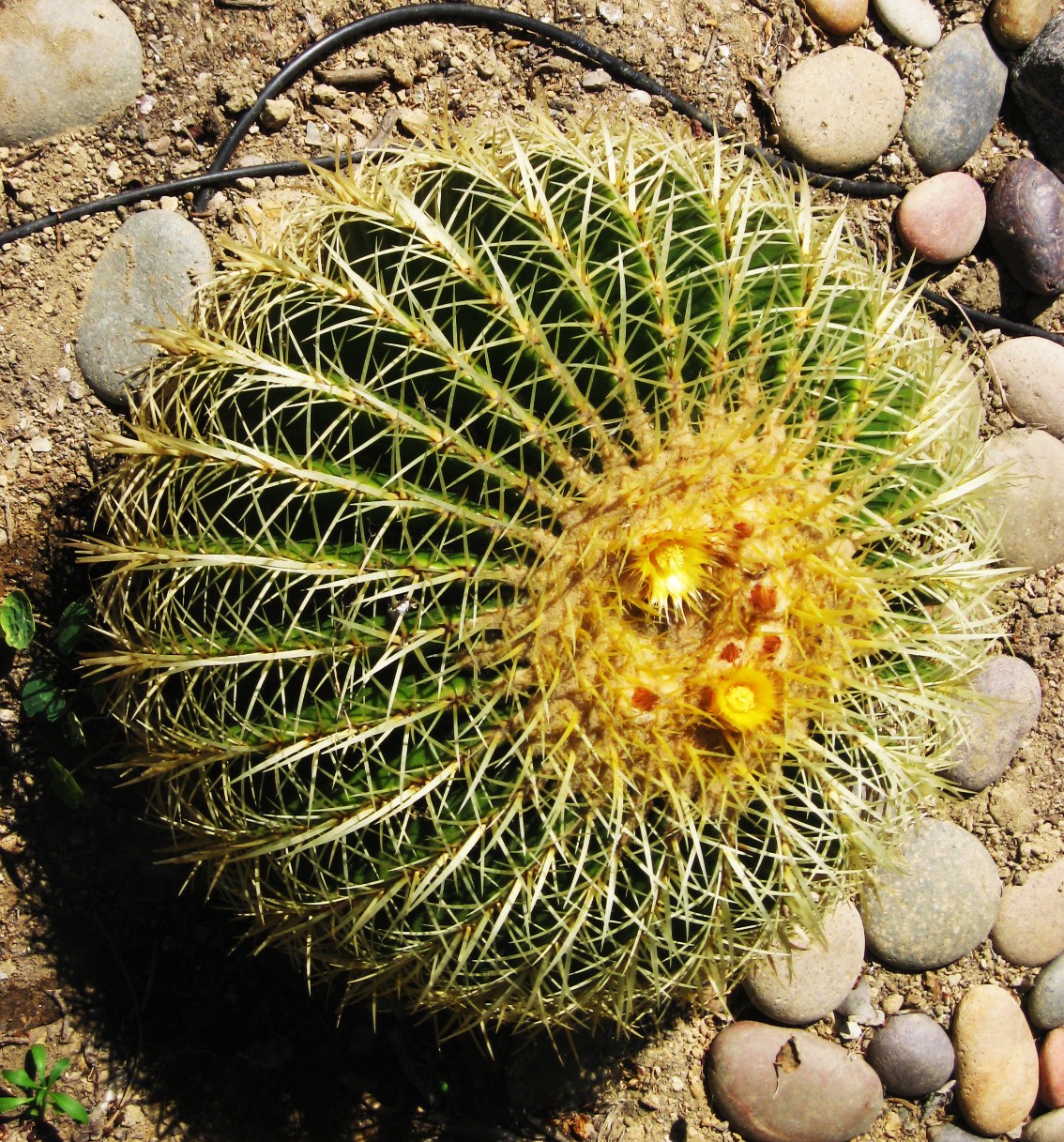
E. grusonii is a wonderful popular plant for adding texture, color and shape to landscapes.
The striking round shape and the dramatic golden bright-yellow spines that absolutely light up in daylight.
It has been increasingly used as an architectural plant in garden design also as in a window-sill.
Description: Growing as a large roughly spherical globe, it may eventually reach over a meter in height after many years. The young seedlings like the other Echinocactus and Ferocactus seedlings, the rib structure is not yet apparent, and they have pronounced tubercles making them look superficially like Mammillarias.
Stalk: is pale green
Ribs: There are 35 ribs in mature plants, but young plants have tuberous app
Spines: straight golden yellow radial spines
Sun Exposure: Full sun to partial sun
Water Needs: Water generously in summer; less watering in winter.
Min Temperature: 55°F (12°C) Frost Tolerance: Hardy to 14° F (-10°C) for short periods
Ferocactus latispinus
Common Name(s): Devil's Tongue Barrel, Crow's Claw Cactus
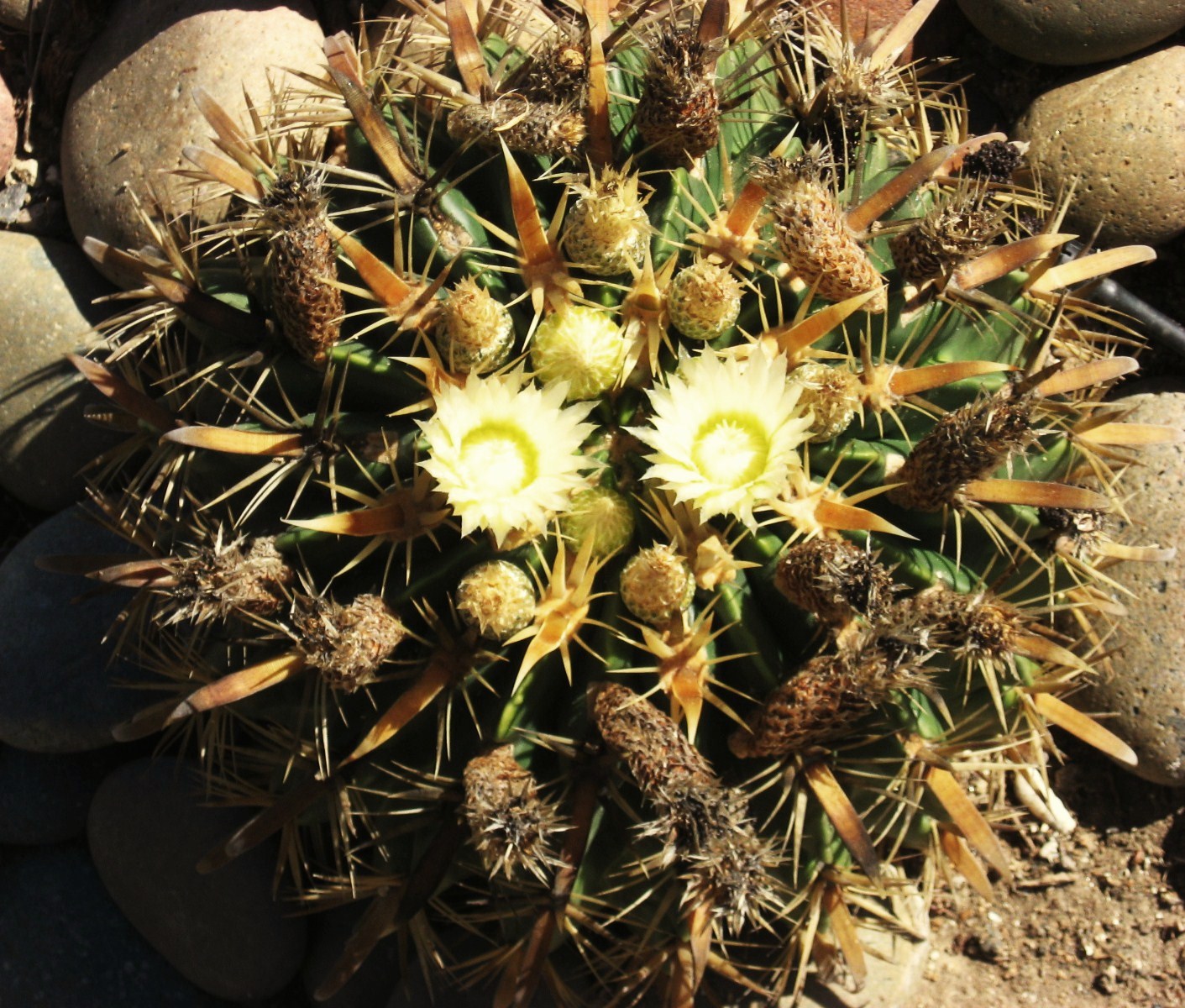
Etymology: Ferocactus: From the Latin word ferox, meaning fierce and the Greek word kaktos, meaning thistle. Latispinus: From the Latin words latus, meaning broad or wide and spina, meaning thorn or prickle.
Description: Globular cactus. Ferocactus latispinus is fairly popular in cultivation because it blooms very early, many young plants will bloom when they reach 4 inches in diameter (10 cm).
Stalk: 10 to 16 inches in diameter (25 to 40 cm);
Ribs: 14 to 23 ribs
Spines:
Central (S): 4 large central spines, the lowest central is wider
Radial (S): 6 to 12 1-inch long radials
Flowers: pinkish purple or yellow flowers, 1 to 1.5 inches in diameter (2.5 to 3.5 cm). They come in late autumn to early winter, and need a fair amount of bright sunlight to form.
Water Needs: Little to moderate water when established
Min Temperature: 50°F (10°C); Frost Tolerance: Hardy to 25°F (-4°C)
Ferocactus glaucescens
Common Name(s): Blue Barrel Cactus

Description: It can be a very neat, compact and attractive addition to any collection. Generally solitary, barrel cactus, bluish green stems up to 22 inches tall (55 cm), 20 inches in diameter (50 cm);
Spines: Straight white-yellow spines
Central (S): 0 or 1 central spine
Radial (S): 6 or 7 radials, 1 to 1.6 inches long (2.5-4 cm).
Flowers: Yellow flowers, 1.2 to 1.5 inches in diameter (3-4 cm), in summer
Sun Exposure: Sun to Partial Shade
Min Temperature: 50°F (10°C) Will take some frost
Ferocatus chrysacanthus f. rubrispinus
Conservation Status: Listed in CITES appendix 2.
Etymology: The species name "chrysacanthus" comes from the Greek for "with golden spines".

Description: This Ferocactus has golden spines- and a LOT of them.. all thick and twisted. It is one of the spiniest of the Ferocacti.
F. chrysacanthus with red spines is one of the best and colorful of the Ferocacti. This is somewhat of a slow growing species. This plant is very densely spined and because of that, will tolerate full sun.
Ferocactus chrysacanthus f. rubrispinus is a solitary barrel cactus. The plant is very densely spined and because of that, will tolerate full sun. This beautiful and rare form has bright red thick, twisted and more or less hooked spines.
Astrophytum capricorne
Common name(s): Goat's Horns Cactus The Goat's Horn (capricorne) is named for the characteristic shape of its long, curled spines.
Recommended Temperature Zone: USDA Zone 9-11
Description:
Solitary globe or columnar cactus.
Growth Habits: This species will eventually slowly produce a tapered column up to 1.2 m in height.
Stem although young plants are globular, they soon become ovoid, and eventually columnar up to 1.2 m tall, 10 (15) cm in diameter. The epidermis of is more or less covered with the typical white woolly flecks characteristic of the genus.
Ribs: Usually 8.
Spines: 5 to 10 up to 7 cm long, Grey to brown wired, twisted, curved, flattened that look like the horn of a Capricorn. As plant ages spines get a bit more intense and messier, but relatively sparse, they are stiff but pliable and fragile, so, plant should be handled with care. The fine spines of this species are an optical artifice supporting the grass-mimicry to the surroundings.
Flowers: Sweet smelling 7.5 cm wide, yellow with a red center.
Blooming Habits The Astrophytum capricorne blooms in summer. The sweet smelling 3 inch wide flowers (7.5 cm) are yellow with a red center. They are followed by a reddish fruit covered with flattened spines, 1 inch in diameter (2.5 cm)
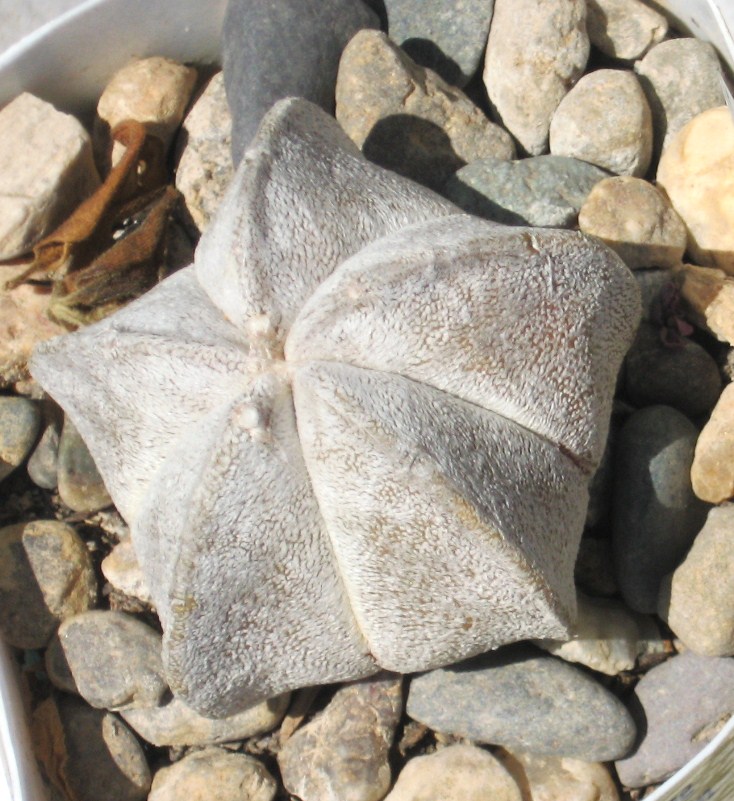
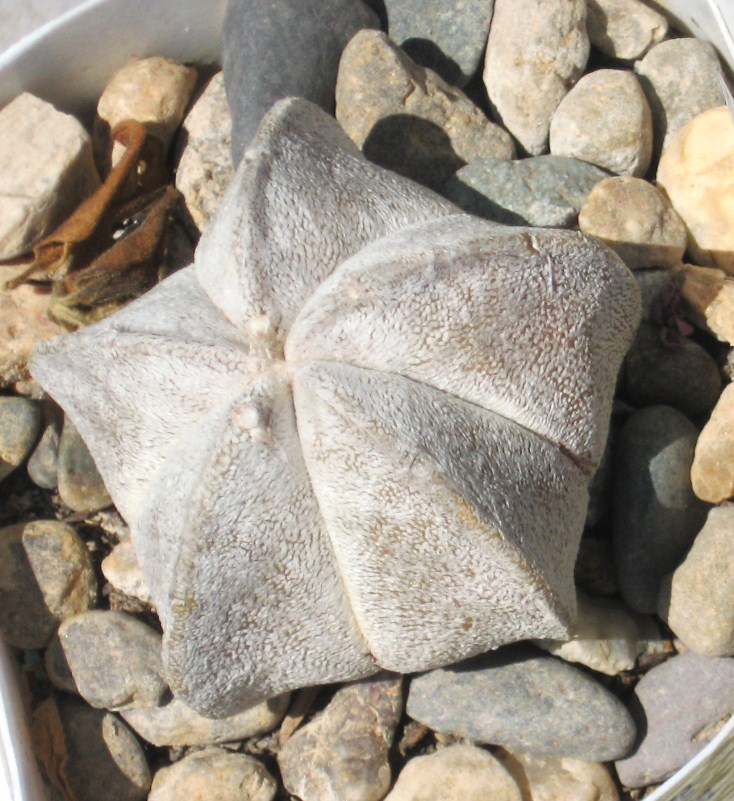
Astrophytum coahuilense
Common Name(s): Hat of white bishop, Bishop's Cap, Bishop's Miter,
Mitra, Bonete de Obispo 
Description: Globular cactus devoid of sting introducing 5 well marked and angled ribs. The epidermis is covered with a flocks very dense (dawned whites) giving a downy and dirty aspect to the plant, what allows him a perfect mimicry with its environment where it
becomes confused among calcareous stones (white - grey) between which they grow.
The flowers are yellow with a characteristic red throat, although can appear pure red or very seldom pure yellow. In the fruit which is red till olive-green coloured and basal opening are up to 200 seeds. Stalk: Globular; then becomes more cylindrical and columnare with age; up to a height of 50cm and diameter of 20-30cm Ribs: These 5 coasts appear from the stadium of seedling, it is a very stable character. There is only on the old individuals that additional coasts can sometimes appear.
Flowers: become blooming at about 3-4 years. Flowers have the root, as all Astrophytum, in the apex at the root of every new areola. The size of the flower (diameter maxi 9 cm)
Cultivation: is not too difficult in a greenhouse, although grows quite slowly. The plants need a loose well-drained mineral soil. They need a good amount of light. Watering can be done weekly during summertime, if the weather is sunny enough, with a little fertilizer added. Kept this way, plants will show a healthy, although slow growth.
Min Temperature: They are frost hardy to -4° (-10°) C
Propagation Methods: By seeds, remembering that seedlings dislike strong light and dry conditions and need to be repotted frequently. Eventually, as they become mature, they attain a maximum size of 8-10 cm (20) cm. However, old plants become senile and have a tendency to succumb to disease and a weak root system. At this stage, as is well known, they die suddenly. So, after they reach 10 cm in diameter grow them slowly, and adopt a new repotting period, using intervals of every 2 - 3 years. Additionally grow them under drier conditions or with stronger sunlight. But plants are often grafted to accelerate growth as they would generally take at least a five years to reach maturity on their own, but the grafted plants are typical rather tall growing, compared with plants on their own roots that are usually more flat to the ground.
Astrophytum myriostigma Japanese cultivar ONZUKA

Origin: Japan, Garden origin (Nursery produced cultivar)
The cultivar 'ONZUKA' (In Japanese speaking "Onzuka Ranpo-gyoku") has snowy-white, heavily speckled epidermis with fabulous markings much like the ‘kabuto’ asterias. The white marking varies considerably from plant to plant and there exist an enormous number of different designs, and also plants change their appearance in age and they are full of surprises as they grows.
Austrocylindropuntia vestita
Common name(s): include: "Cotton Coral Cactus", "Cotton Pole", "Old Man Opuntia"
Etymology: The species name "vestita" refers to the plants' vestments, its clothing of white hairs that turns into dens colonies what appears to be patches of snow remembering the high mountain peaks that surround - on all sides - the habitat of this plant
Recommended Temperature Zone: USDA: 10-11
Description: Austrocylindropuntia vestita It forms slim columns densely cloaked with thin long white hairs. Every one has it, grows and flowers well. It is usually a slender columnar white and very furry cactus from high altitude. The standard plants form branch both basally and near the top of the stems. Stem: Cylindrical 2-3 cm in diameter covered densely with long white hairs. The stems can eventually grow to almost 60 cm tall. Sun Exposure: Full sun. Min Temperature: 50 ° F (10 ° C). Frost Tolerance: Light frost only
Mammillaria nejapensis
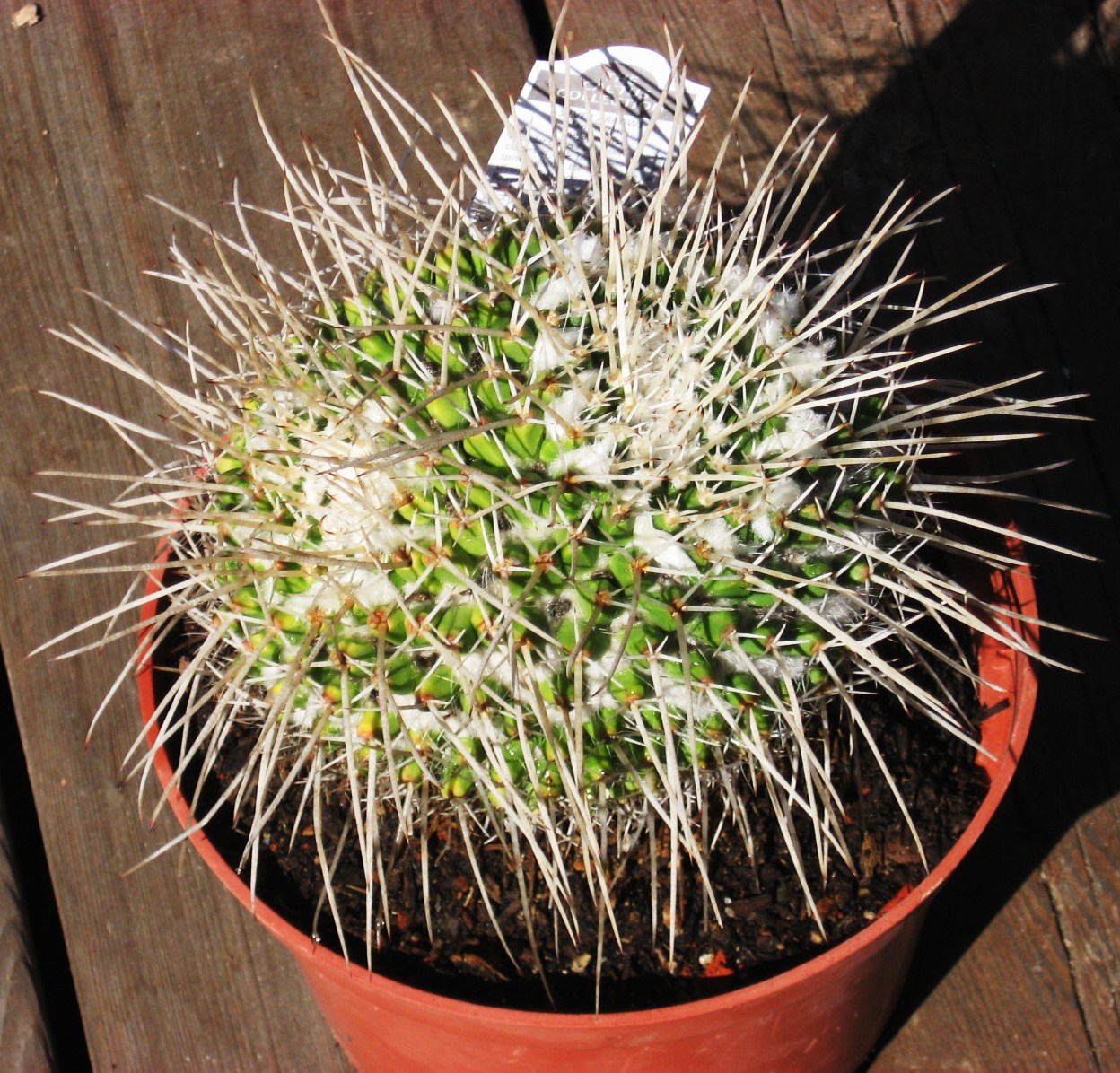
It forms globular stems with silvery white spines with black tips up to 2" in length, and dense wool at the areoles. After a year the head of plant divided, than every heads divided again. Do you imagine how unusual will be this cactus?
Mammillaria nejapensis is very variable, especially for the length of the spines, and at the beginning there were two recognized varieties: var. brevispina and var. longispina, with respectively short and long spines, but they are merely local or individual variations. This species branches basally or more frequently forms large colonies by dichotomous division.
Description: This is one of the Mammillaria commonly called "Owl Eye Cactus", known for dichotomous branching (forking or dividing into two parts). Although dichotomous branching is not a common occurrence in cacti in general, it happens for some reason in this particular subspecies. What is interesting about this cactus is that it began as a single head, and it has now divided twice, forming what will be four separate branches. When the division process started, it was obvious that four heads would appear, but I don’t think the one head divided quadruple. Most probably, one head became two, and then those two immediately divided.
The Mammillaria nejapensis forms globular stems with silvery white spines up to 2" in length, and dense wool at the areoles. Plant becomes slightly columnar to 6" in height. Each single stem begins to divide to form two stems to form large clusters.
Stem: Globose to short cylindrical, somewhat wider in the upper part, blue-green to dark green, to 15 cm high and 5 - 7.5 in diameter, with latex. A cream coloured 'snowy' tomentum is present on the top of the plant.
Tubercles: Tubercles firm, pyramidal with the lacteal juice, arranged spirally with 13-21 parastichys
Opuntia basilaris

Description: The Beaver-tail Cactus is a smaller prickly pear cactus, and it will often start blooming when it has only two pads. Beware that the glochids (these little barbed bristles organized in clusters) can penetrate the skin.
In the wild, its principal range is limited to the Mojave-Colorado desert.
Succulent to 2 feet tall (60 cm), 4 feet spread (1.2 m); blue or slightly purplish
Flowers: The beaver tail cactus has 2.6-3 inches wide (6-7 cm), fuschia colored flowers in March-April. The spineless fruit is dry when ripe. The seeds are 0.24 to 0.4 inch in diameter (6-10 mm)
Fruits: The fruits can be cooked, as well as the pads.
Recommended Temperature Zone: USDA: 7-10
Sun Exposure: Full sun
Water Needs: little or no water once established, in its natural distribution area, it receives mostly winter rains.
Min Temperature: Frost Tolerance: Hardy to 0°F (-18°C)
Very good for landscaping as well as for windowsill
Opuntia brachyclada hybrid
Common Name(s): Beavertail Cactus
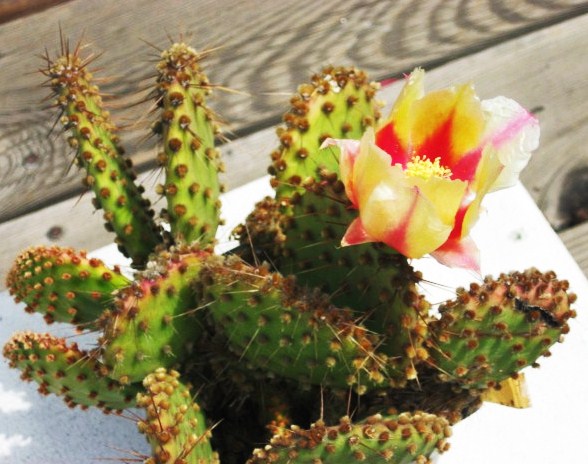 Opuntia brachyclada is a synonim of Opuntia basilaris. It has green pads
It is a smaller prickly pear cactus, and it will
often start blooming when it has only two pads. The plant can
withstand temperature -15º C ( 5° F).
Globular cactus. F.latispinus is fairly popular in cultivation because it blooms very early, many young plants will bloom when they reach 4 inches in diameter (10 cm).
You can buy two for $5.00, or three for $6.50. Not in stock
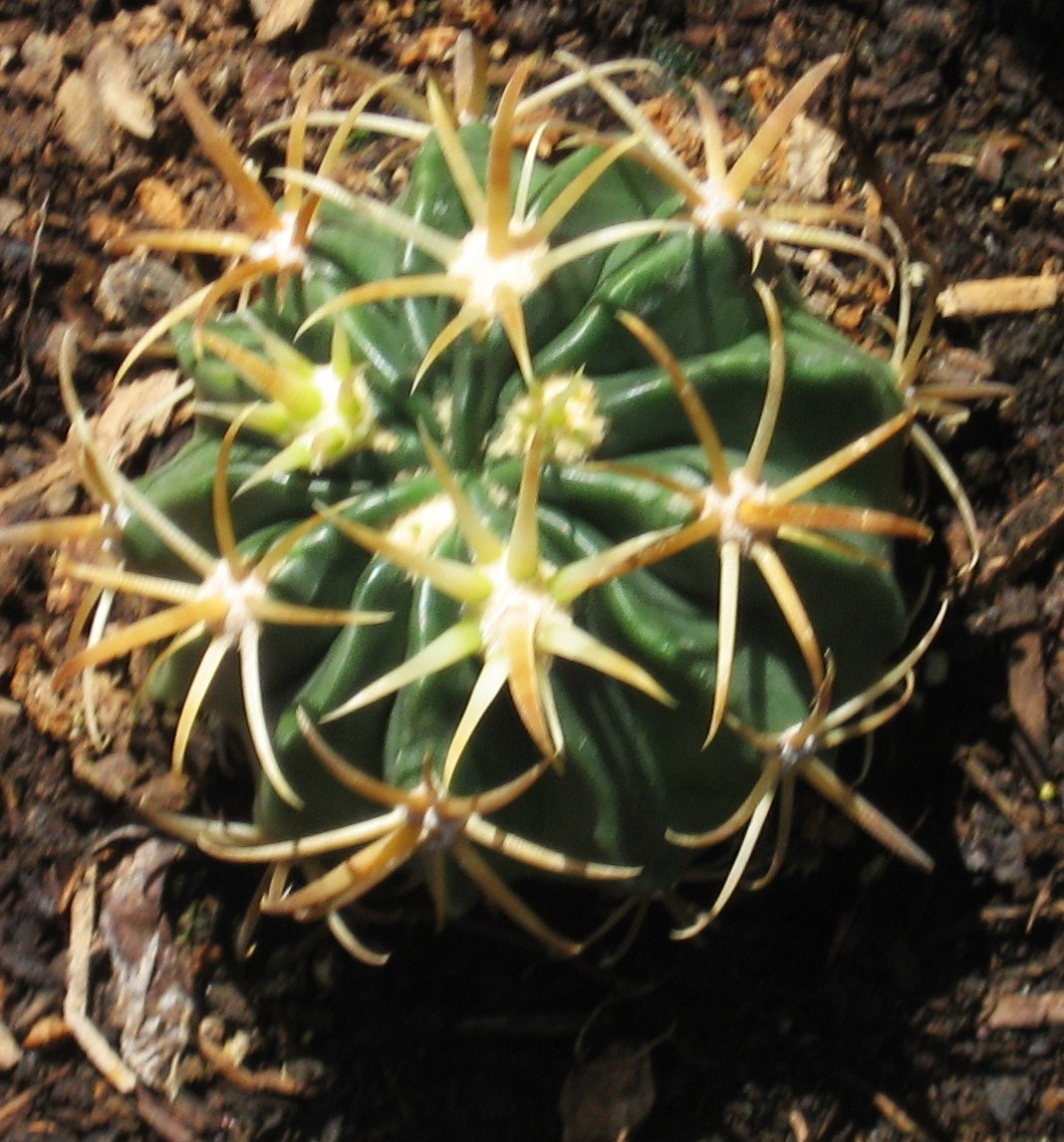
Ferocactus latispinus Ø3 cm
This F. latispinus is 3 cm in diameter, as you can see on the picture Seedling 3year old
You can buy two for $3.00, or 3 for $5.00 Not in stock

Ferocactus glaucescens Ø5 cm

Common Name: Blue Barrel Cactus
It can be a very neat, compact and attractive addition to any
collection. Generally solitary, barrel cactus, bluish green stems up
to 22 inches tall (55 cm), 20 inches in diameter (50 cm) Not in stock
It can be a very neat, compact and attractive addition to any
collection. Generally solitary, barrel cactus, bluish green stems up
to 22 inches tall (55 cm), 20 inches in diameter (50 cm)
Ferocatus chrysacanthus f. rubrispinus 5 years seedling
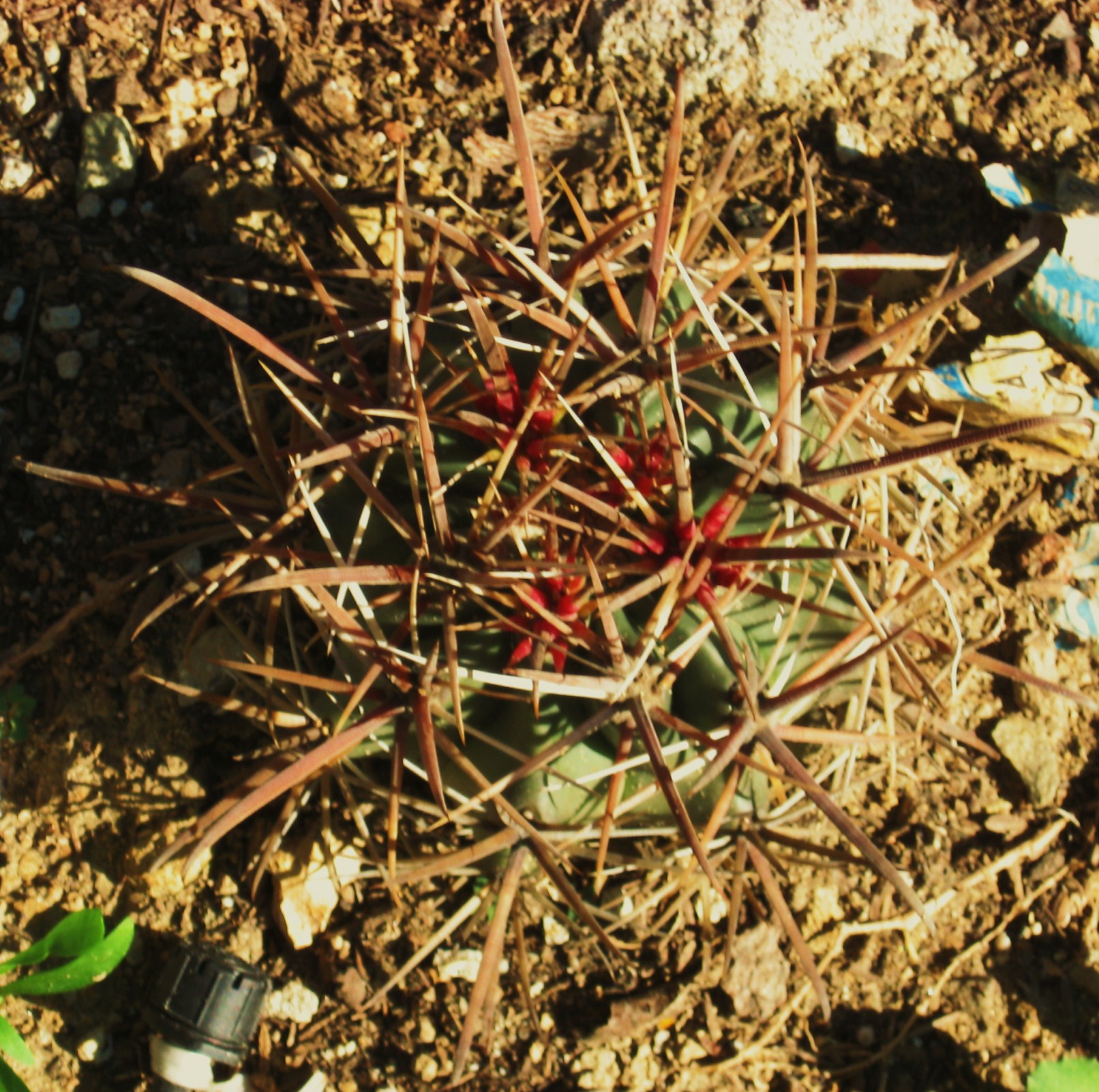
This beautiful and rare form has bright red thick, twisted and more or less hooked spines
Stalk: Solitary, globose to cylindrical, dark green stem. It riches 1 foot in diameter (30 cm), 3 feet tall (90 cm). Not in stock
Astrophytum capricorne Ø4 cm
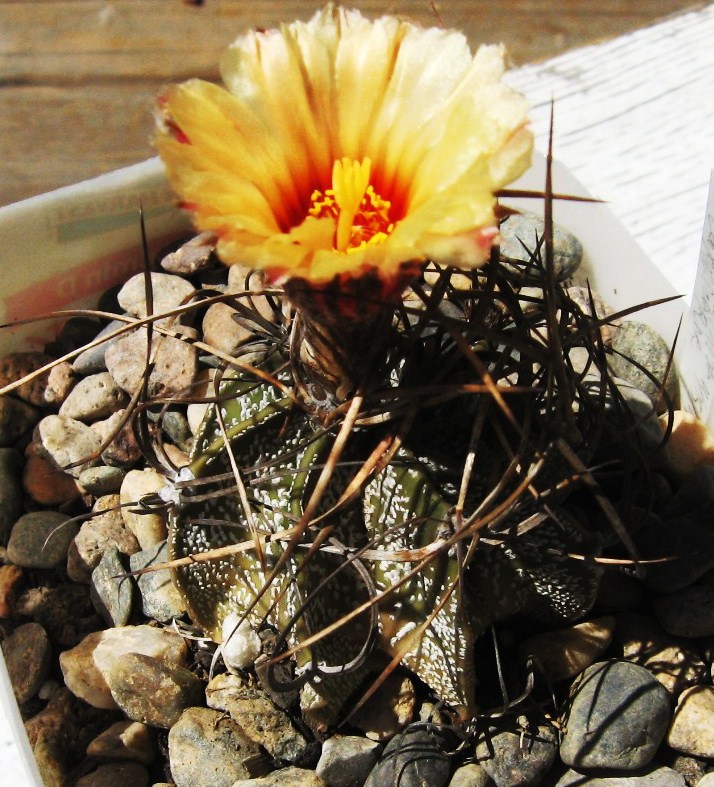
Common name(s): Goat's Horns Cactus The Goat's Horn (capricorne) is
named for the characteristic shape of its long, curled spines.
Recommended Temperature Zone: USDA Zone 9-11
Astrophytum capricorne Ø3 cm $4.00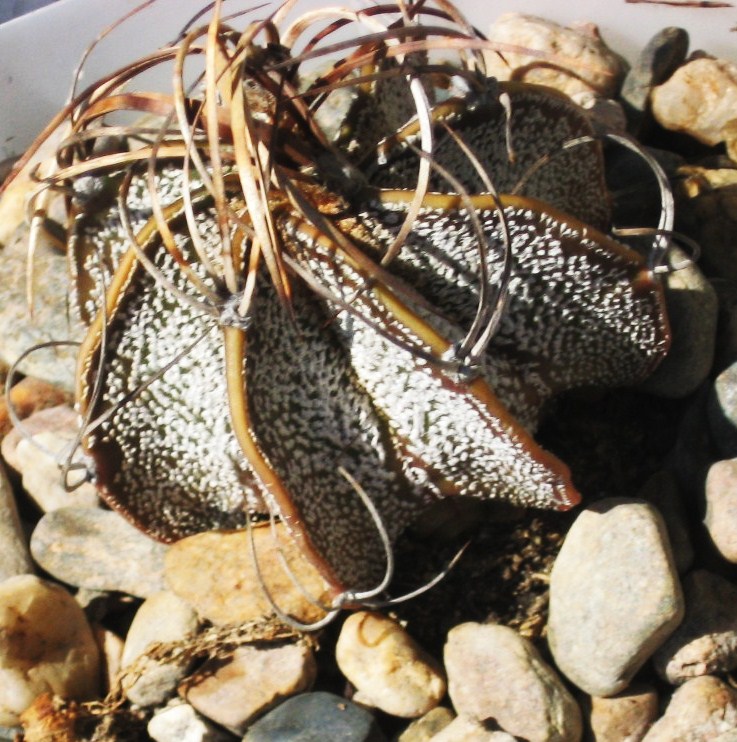
Common name(s): Goat's Horns Cactus The Goat's Horn (capricorne) is
named for the characteristic shape of its long, curled spines.
Recommended Temperature Zone: USDA Zone 9-11
Out of stock
 Not in stock
Common Name(s): Hat of white bishop, Bishop's Cap, Bishop's Miter,
Description: Globular cactus devoid of sting introducing 5 well marked and angled ribs. The epidermis is covered with a flocks very dense (dawned whites) giving a downy and dirty aspect to the plant, what allows him a perfect mimicry with its environment where it becomes confused among calcareous stones (white - grey) between which they grow.
 Not in stock
Common Name(s): Hat of white bishop, Bishop's Cap, Bishop's Miter,
Astrophytum coahuilense is out of stock
Opuntia brachyclada is a synonym of Opuntia basilaris. It has green pads
It
is a smaller prickly pear cactus, and it will often start blooming when
it has only two pads. The plant can withstand temperature -15º C ( 5°
F).
Very good for landscaping as well as for windowsill
Out of stock
Opuntia brachyclada hybrid not-rooted pads $2.00

Opuntia brachyclada is a synonym of Opuntia basilaris. It has green pads
It is a smaller prickly pear cactus, and it will often start blooming when it has only two pads. The plant can withstand temperature -15º C ( 5° F).
Opuntia segments can be planted without roots directly in soil in the depth of 1/3 of the size of the segment. You can use a regular potting soil.Make soil a little wet and in 4- 6 weeks you can see new grows.
Very good for landscaping as well as for windowsill

Out of stock
Shrubby cactus; stems not segmented, up to 20 inches long, 1.2 inches
in diameter (3 cm); persistent leaves, up to 1.2 inches long (3 cm);
hairy areoles with thin long white hairs. Beautiful bright red flowers
Opuntia basilaris Rooted pads
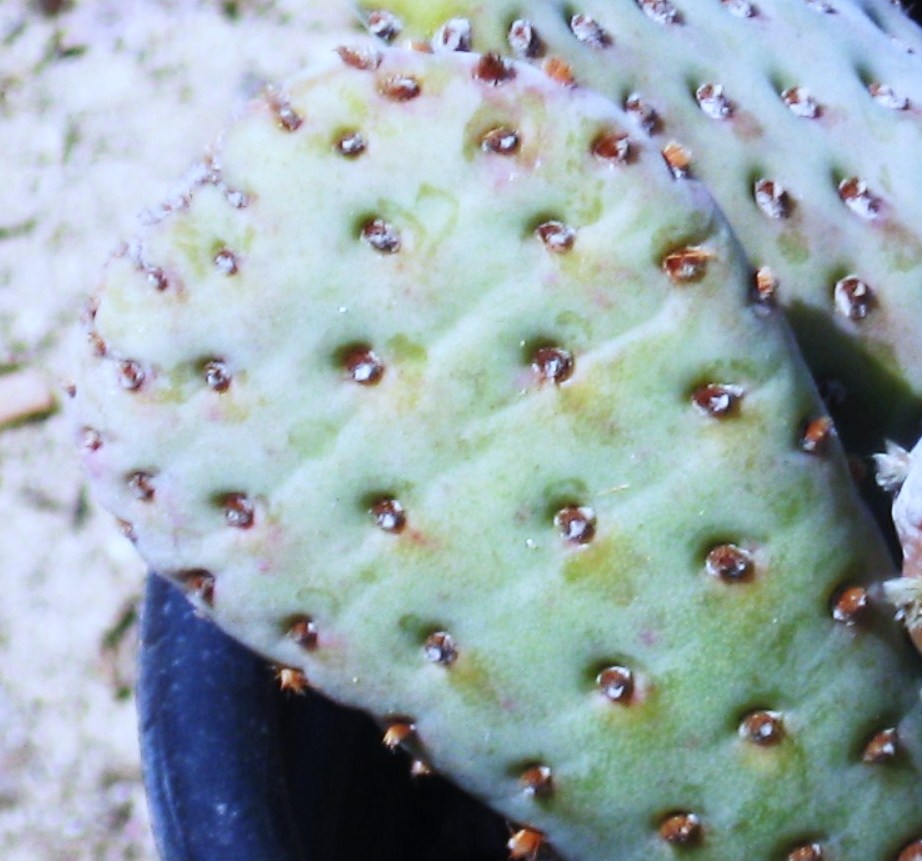
$ 5.00 USD New offer $4.00. Common Name(s): Beaver-tail Cactus The Beaver-tail Cactus is a smaller prickly pear cactus, and it will often start blooming when it has only two pads. Beware that the glochids (these little barbed bristles organized in clusters) can penetrate the skin.
Out of stock
Very good for landscaping as well as for windowsill
Mammillaria nejapensis
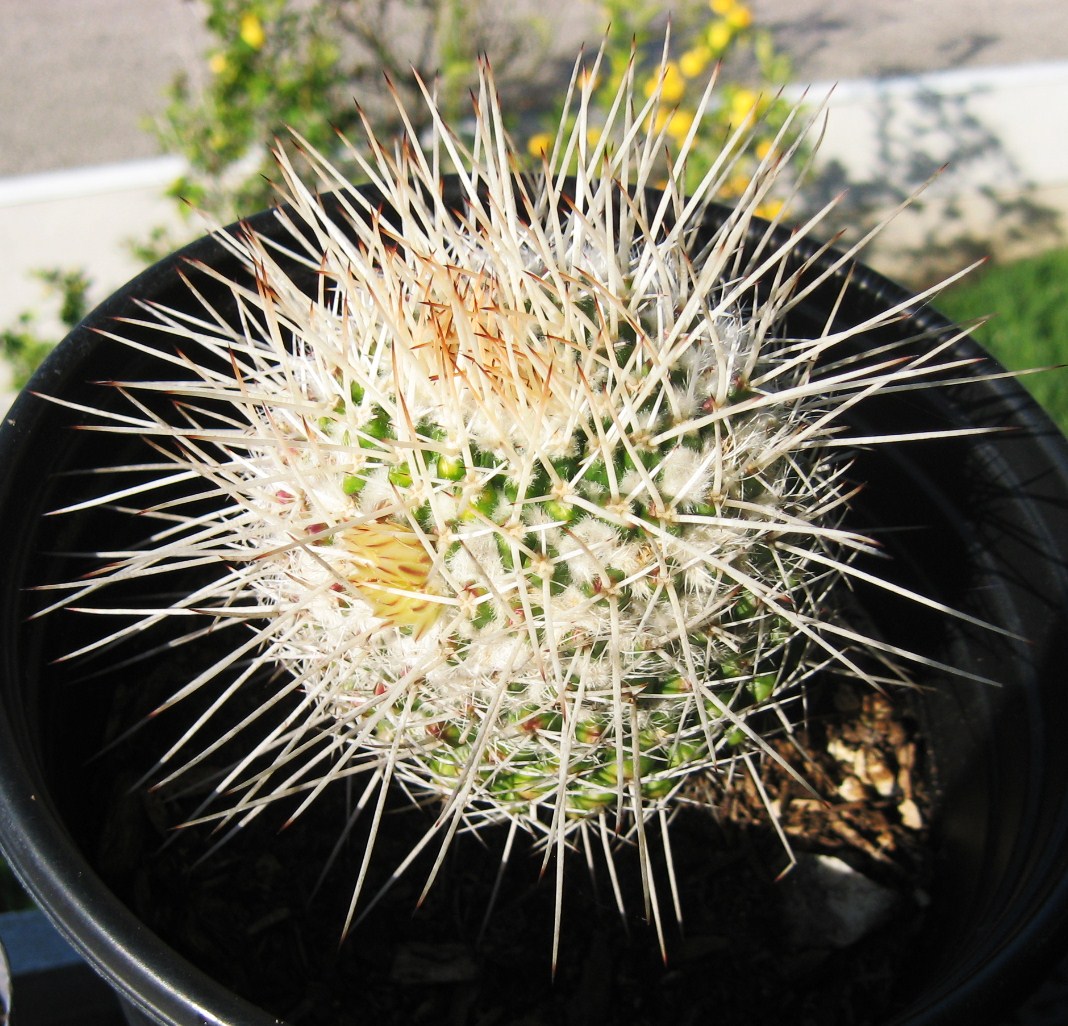 Common
Name(s): Silver Arrows. It forms globular stems with silvery white
spines with black tips up to 2" in length, and dense wool at the
areoles. After a year the head of plant divided, than every heads
divided again. Do you imagine how unusual will be this cactus?
Common
Name(s): Silver Arrows. It forms globular stems with silvery white
spines with black tips up to 2" in length, and dense wool at the
areoles. After a year the head of plant divided, than every heads
divided again. Do you imagine how unusual will be this cactus?
This exemplar has very long spines and blooms. There is left one plant Out of stock
Opuntia ellisiana not-rooted pads $1.50
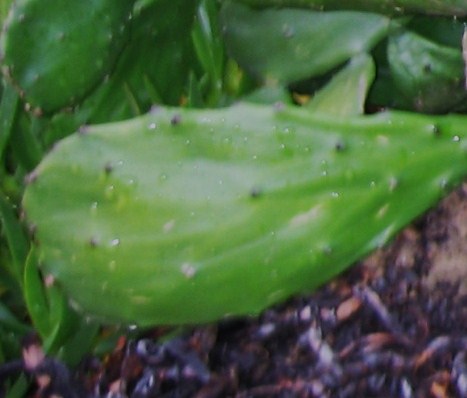
It is very easy to root it. Just put the segment in soil at 1/3 and wet the soil. In 4-5 weeks it get roots. You find new growth on it.
Opuntia ellisiana
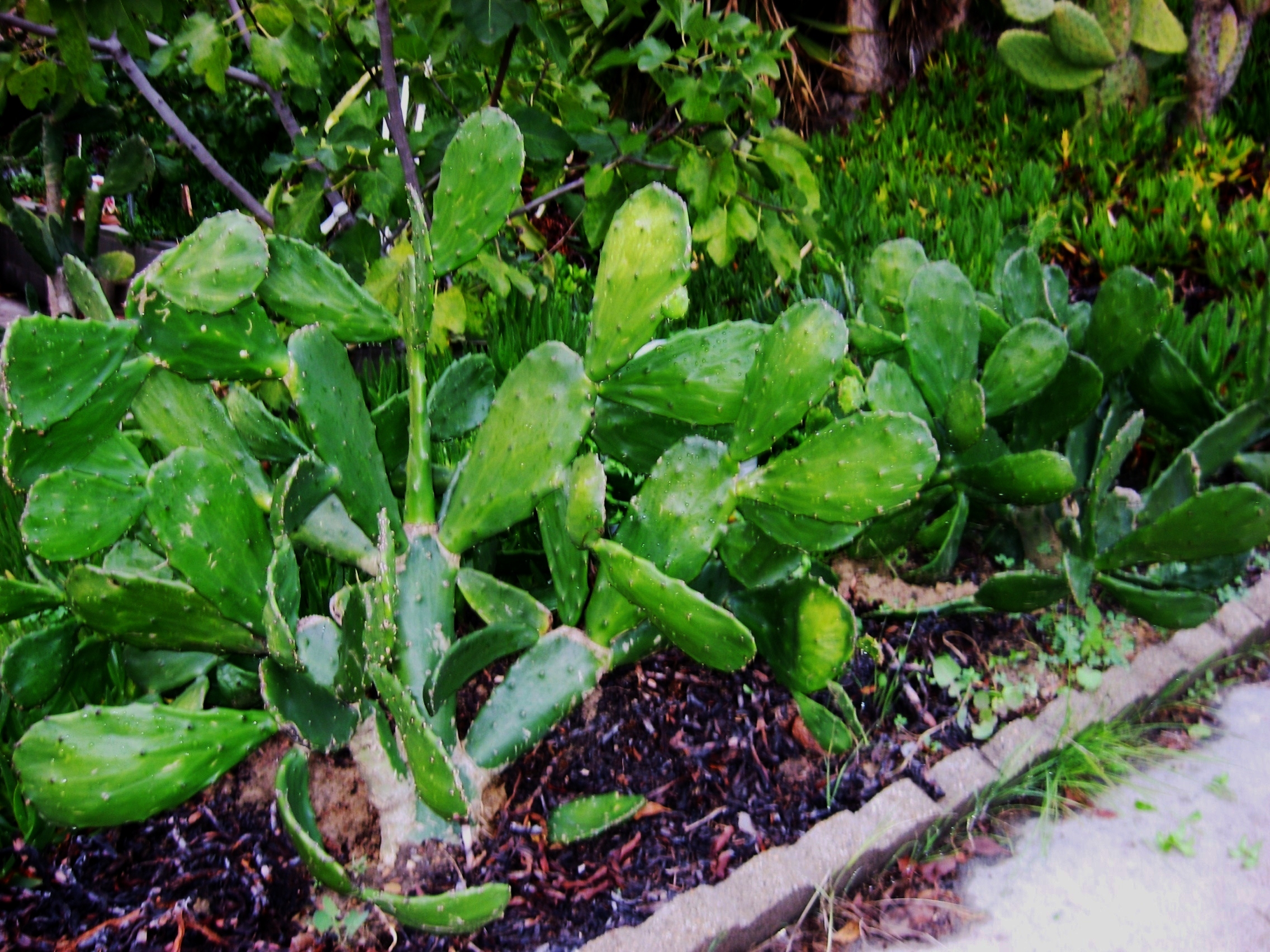
Opuntia ellisiana is very fast growing plant. It can withstand at
- 15ºC It can be used on borders to make fences. Plant them along
border with spaces 1.5 meter. It take a year to get a fence.
Ferocactus rectispinus
Common Name(s): Long Spined Barrel Cactus, Straight Spine Barrel
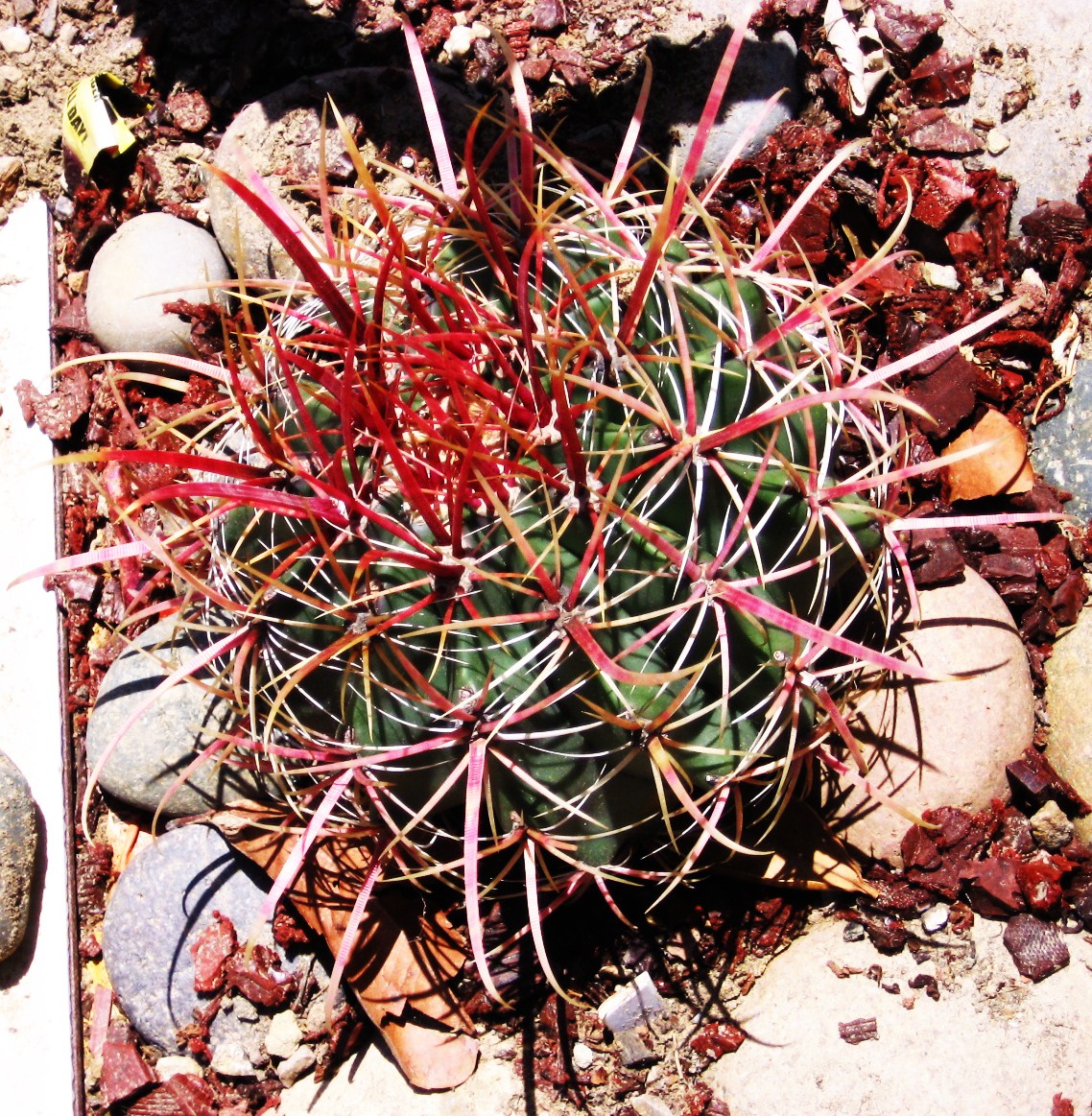
Stalk: Erect, globular when young to a stout cylinder when older, 30
-200 tall × 30-60 cm in diameter; tubercled when young later forming
ribs.
Ribs: 15-21, shallowly notched immediately above each areole.
Spines: New spines are bright red
Central (S): 1, very long ( 9-25 cm long × 2.5-4 mm. in cross section ), never hooked (or slightly hooked, but only on relatively young plants), roughly cylindrical, annulated, all robust and rigid. Reddish, reddish grey, or horn colored.
Radial (S): 5 to 9, spreading, not hooked, 2.5 to 7 cm long, with the upper 3 larger.
Areolas: Oval with brown wool, 3-4 cm apart.
Flowers: Large, light yellow, 6-7.5 long× 5-7.5 cm in diameter: Blooming in the Summer
Sun Exposure: Full sun to light shade
Water Needs: Little to no water when established; when the plant vegetate it needs watering when the blanket of soil is dry.
Min Temperature: 50°F (10°C); Frost Tolerance: 25°F (-4°C)
Propagation Methods: from Seeds
Ferocactus rectispinus 6 cm
for $5.30 Out of stock
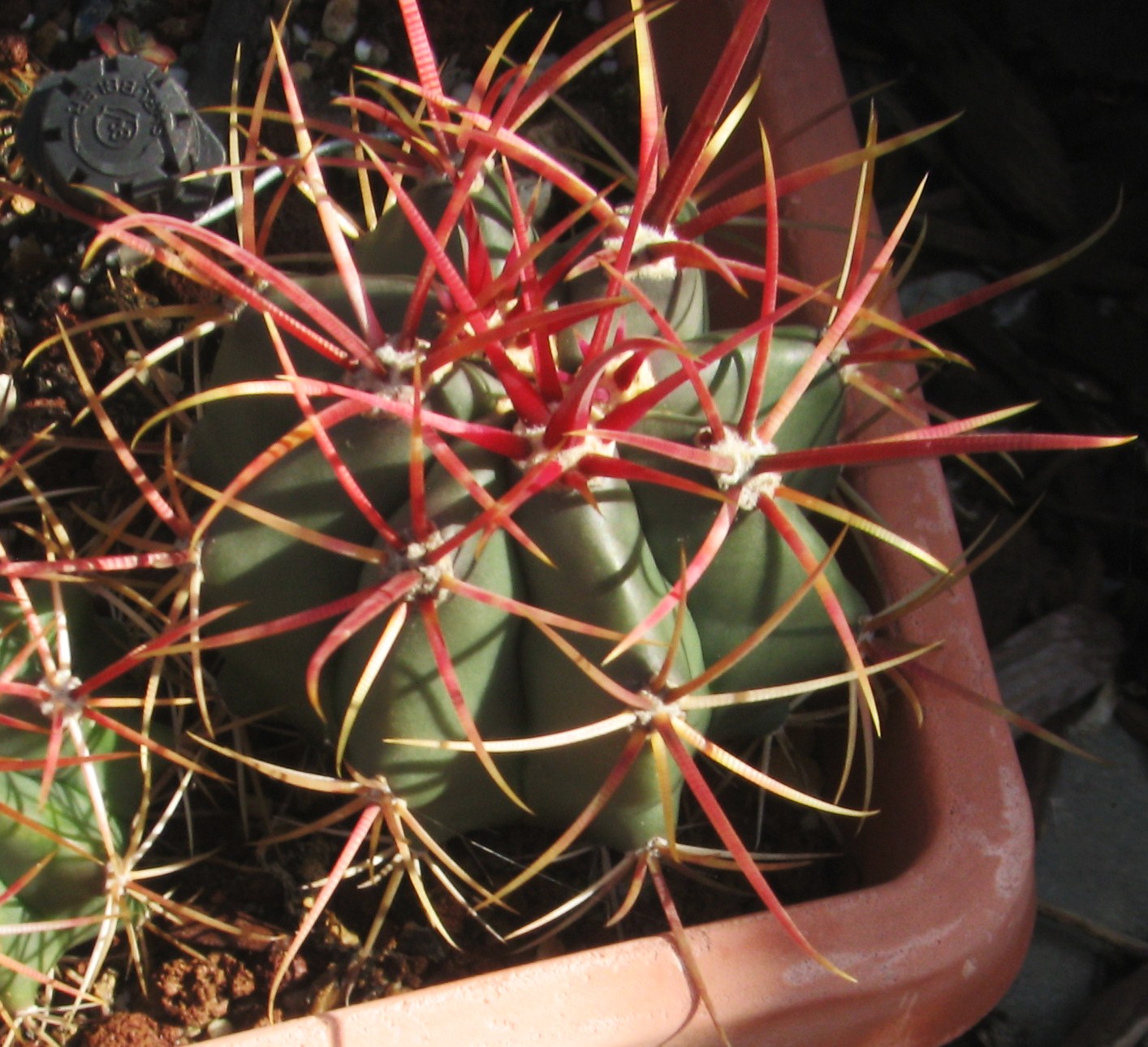
Ferocactus rectispinus
Common Name(s): Long Spined Barrel Cactus, Straight Spine Barrel
Stalk: Erect, globular when young to a stout cylinder when older, 30
-200 tall × 30-60 cm in diameter; tubercled when young later forming
ribs.
Ribs: 15-21, shallowly notched immediately above each areole.
Spines: New spines are bright red
Central (S): 1, very long ( 9-25 cm long × 2.5-4 mm. in cross section ), never hooked (or slightly hooked, but only on relatively young plants), roughly cylindrical, annulated, all robust and rigid. Reddish, reddish grey, or horn colored.
Radial (S): 5 to 9, spreading, not hooked, 2.5 to 7 cm long, with the upper 3 larger.
Areolas: Oval with brown wool, 3-4 cm apart.
Flowers: Large, light yellow, 6-7.5 long× 5-7.5 cm in diameter: Blooming in the Summer
Sun Exposure: Full sun to light shade
Water Needs: Little to no water when established; when the plant vegetate it needs watering when the blanket of soil is dry.
Min Temperature: 50°F (10°C); Frost Tolerance: 25°F (-4°C)
Propagation Methods: from Seeds